The Heretic of Vienna
In 1846, Dr. Ignaz Semmelweis made an observation that should have revolutionized medicine overnight. Working at Vienna General Hospital, he noticed that women giving birth in the ward staffed by doctors and medical students died from childbed fever at rates three times higher than those in the ward run by midwives.
 Photo: Vienna General Hospital, via c8.alamy.com
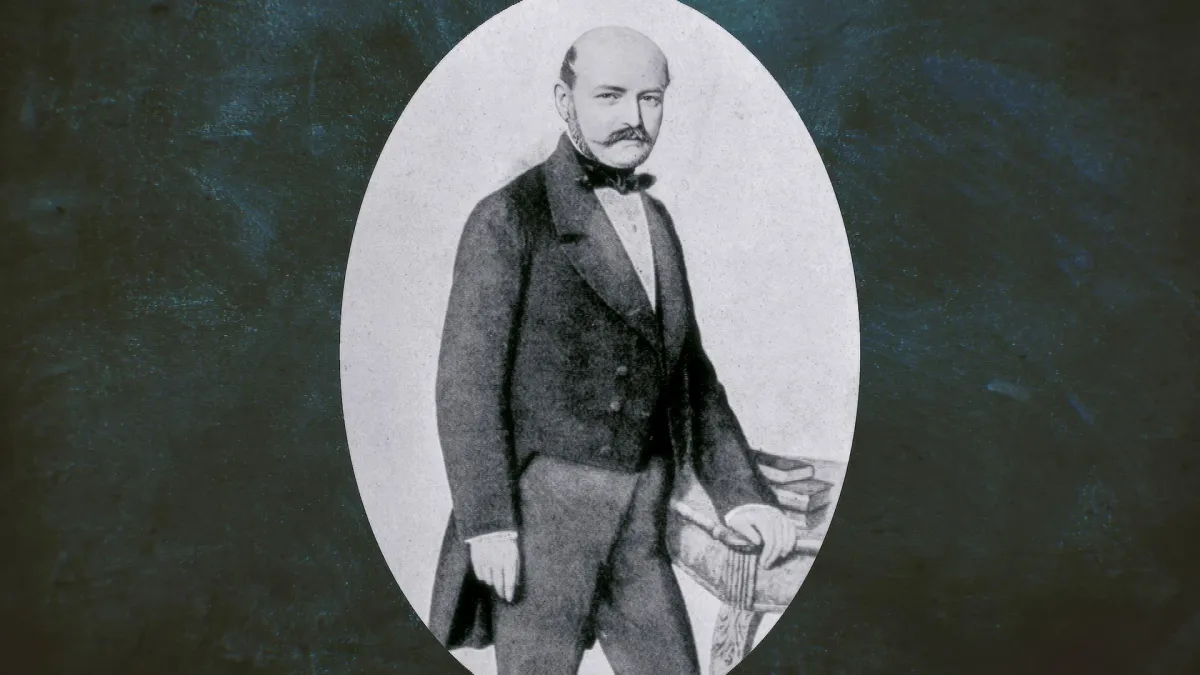 Photo: Ignaz Semmelweis, via www.zdfheute.de
The difference, Semmelweis realized, was that doctors routinely performed autopsies before delivering babies—without washing their hands in between. When he instituted mandatory hand-washing with chlorinated lime solutions, mortality rates plummeted from 18% to less than 2%.
You'd think the medical establishment would have embraced this life-saving discovery. Instead, they destroyed him.
When Science Met Society
Semmelweis published his findings in 1847, but European and American physicians rejected them almost universally. The reasons they gave were scientific—germ theory wouldn't be widely accepted for another 30 years, and the idea that invisible particles could cause disease seemed absurd to doctors trained in miasma theory, which blamed illness on "bad air."
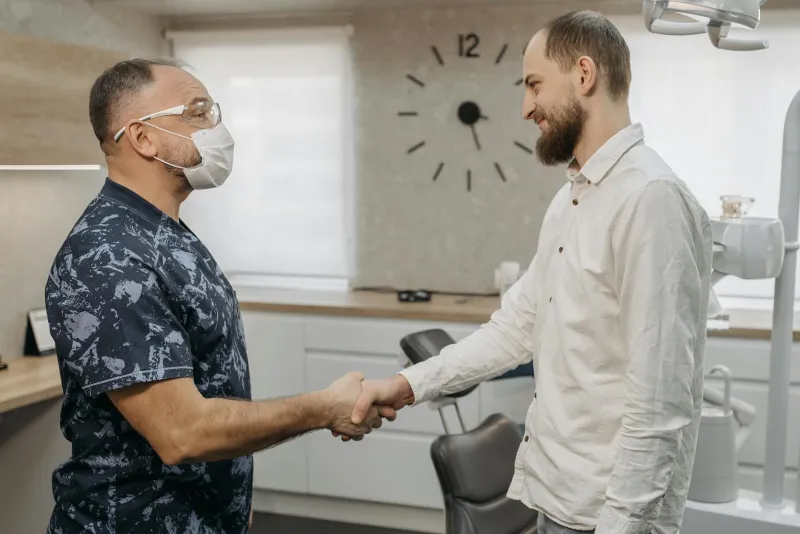
But there was another, more uncomfortable reason for the resistance: Semmelweis wasn't just challenging medical theory. He was attacking one of the fundamental rituals of respectable society—the handshake.
In 19th-century America, the handshake had evolved far beyond a simple greeting. It was a declaration of equality, a sign of trustworthiness, and a cornerstone of democratic ideals. Politicians built careers on their grip. Business deals were sealed with a shake. Refusing to shake hands wasn't just rude—it was practically un-American.
The Politics of Touching
The handshake's cultural power stemmed from its democratic origins. Unlike the bows and curtsies that dominated European etiquette, the handshake implied that both parties were equals. It had become the signature gesture of American egalitarianism, proof that in the New World, a farmer could greet a senator as an equal.
This made Semmelweis's findings particularly threatening to American physicians, who occupied a precarious social position in the mid-1800s. Medicine was still emerging as a profession, competing with folk healers, patent medicine salesmen, and religious faith for credibility. Doctors needed to project confidence and respectability—qualities that seemed incompatible with obsessive hand-washing and fear of human contact.
When American medical journals finally began discussing Semmelweis's work in the 1850s, they framed it as a European eccentricity unsuited to American sensibilities. The Boston Medical and Surgical Journal dismissed his methods as "unnecessarily elaborate" and suggested that American doctors' superior constitution made such precautions unnecessary.
The Gentleman's Dilemma
The resistance to hand hygiene revealed a deeper conflict between medical knowledge and social expectations. American doctors were expected to be gentlemen first and scientists second. They wore formal black coats, carried themselves with dignity, and maintained the social rituals that marked them as respectable members of society.
Excessive concern about cleanliness, on the other hand, was seen as effeminate or foreign. Real Americans weren't afraid of a little dirt. The frontier spirit that had built the nation celebrated toughness over fastidiousness. A doctor who refused handshakes or constantly washed his hands might be medically correct, but he'd also be socially suspect.
This created an impossible choice: follow the science and risk social ostracism, or maintain respectability and ignore evidence that could save lives. Most American physicians chose respectability.
The Slow Conversion
It took the Civil War to begin changing American attitudes about medical hygiene. Army surgeons, faced with massive casualties and limited resources, couldn't afford to prioritize social niceties over survival rates. Some began adopting Semmelweis-style protocols, not because they believed in germ theory, but because they worked.
Even then, progress was slow. Dr. Joseph Lister began promoting antiseptic surgery in the 1860s, building on Semmelweis's work and Louis Pasteur's germ theory. But American surgeons resisted his methods for decades, partly because they required abandoning the traditional black surgical coats (which showed off bloodstains as badges of experience) in favor of clean white garments.
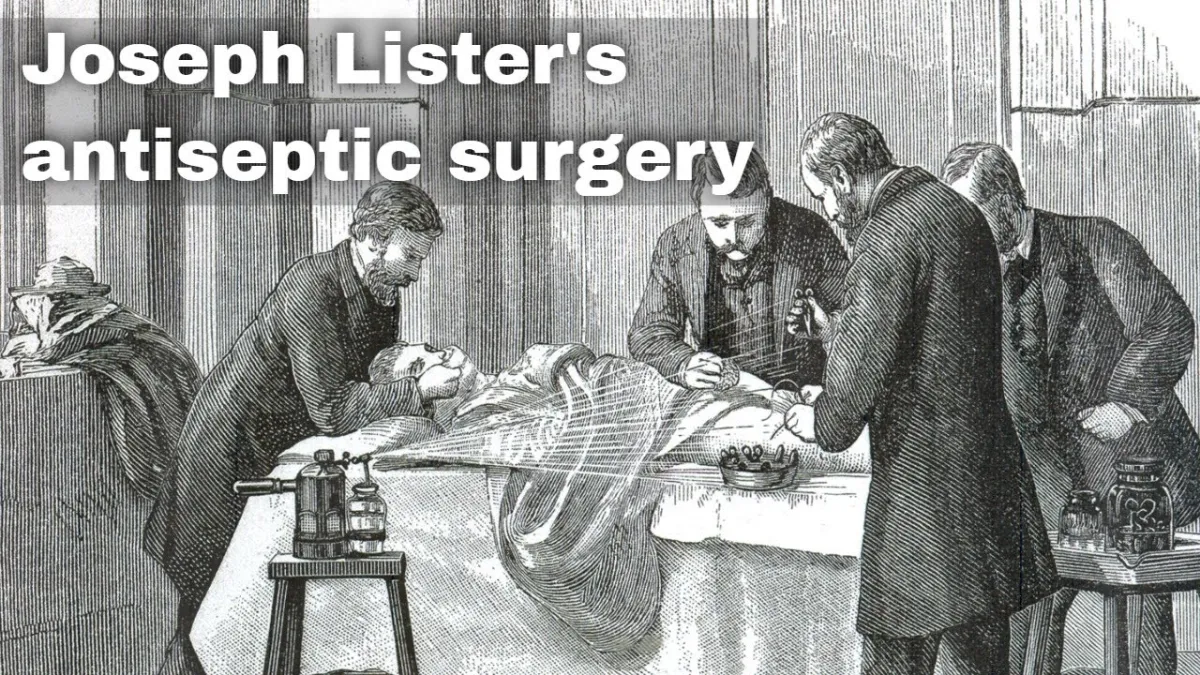 Photo: Joseph Lister, via i.ytimg.com
The handshake remained largely unquestioned. Medical textbooks of the 1870s and 1880s discussed hand-washing for surgical procedures but said nothing about social interactions. The idea that routine greetings could spread disease was still too radical for mainstream medicine.
The Germ Theory Revolution
By the 1880s, Robert Koch's identification of specific disease-causing bacteria had made germ theory undeniable. American medical schools began teaching Lister's antiseptic principles. Hospitals started requiring hand-washing between patients. The scientific revolution Semmelweis had started finally reached American medicine—40 years late.
But even as doctors accepted the science of disease transmission, they struggled with its social implications. Medical journals of the 1890s are filled with awkward discussions of how to balance hygiene with etiquette. Should doctors wear gloves when examining patients? Was it acceptable to decline handshakes? How could physicians maintain their social standing while acknowledging that human contact was dangerous?
The compromise that emerged was typically American: doctors would be scrupulously clean in medical settings but maintain normal social behavior everywhere else. The examining room became a sterile zone where scientific principles ruled, while the consultation office remained a space where social conventions dominated.
The Handshake Endures
Remarkably, even as germ theory became mainstream, the handshake not only survived but strengthened. The early 20th century saw it become more entrenched than ever in American business and politics. Etiquette guides of the 1910s and 1920s devoted entire chapters to proper handshaking technique, emphasizing its importance for success in modern life.
This persistence reveals something profound about the relationship between knowledge and behavior. Americans had accepted that germs caused disease, but they'd also decided that some social risks were worth taking. The handshake was too valuable as a cultural institution to abandon for mere medical reasons.
The Pandemic Test
This tension between science and society played out again in 2020, when COVID-19 temporarily made Semmelweis's concerns mainstream. For a brief moment, Americans seriously debated whether to retire the handshake permanently. Public health officials recommended elbow bumps and waves. Some predicted the end of an era.
But as vaccines became available and case numbers dropped, the handshake returned with surprising speed. By 2022, most Americans were shaking hands again, despite ongoing scientific evidence about disease transmission through touch. Once again, social convention had trumped medical knowledge.
The Lesson We Keep Forgetting
Semmelweis died in 1865, ironically from an infection that might have been prevented by the hand hygiene he championed. His vindication came too late to save him, but his story reveals something enduring about human nature: we'll accept scientific facts in the abstract while continuing behaviors that contradict them in practice.
The handshake's survival through multiple disease outbreaks, from the 1918 flu pandemic to COVID-19, proves that some cultural institutions are stronger than scientific evidence. Americans have repeatedly chosen social cohesion over individual safety, democratic ritual over medical caution.
In the end, Semmelweis wasn't just fighting germs—he was fighting the very idea of American equality, encoded in a simple gesture that said we're all in this together. That's a battle no amount of scientific evidence can win, because it's not really about science at all. It's about who we are when we reach out to touch each other, and who we're willing to become when we don't.