The Crisis of the Angry Customer
In 1965, American businesses faced an unexpected problem: customers were walking out of stores not because the lines were too long, but because they couldn't predict how long they would be. Supermarkets, banks, and department stores were losing millions in revenue to customer frustration that had nothing to do with actual wait times and everything to do with perceived fairness and predictability.
The traditional system seemed logical enough. Multiple service points meant multiple lines — one line per cashier, one line per bank teller, one line per service counter. Customers could choose their line based on factors they could observe: the length of each queue, the speed of individual servers, or the complexity of transactions ahead of them.
But this system created a psychological nightmare. Customers constantly second-guessed their choices, switching lines when adjacent queues moved faster, growing increasingly frustrated when their chosen line stalled while others advanced. The problem wasn't the wait itself — it was the feeling that the wait was unfair, unpredictable, and potentially endless.
The Behavioral Scientists Step In
The solution came from an unexpected collaboration between industrial engineers and behavioral psychologists who had been studying human responses to uncertainty and perceived fairness. Their research revealed something counterintuitive: people were more willing to wait longer in a predictable system than shorter periods in an unpredictable one.
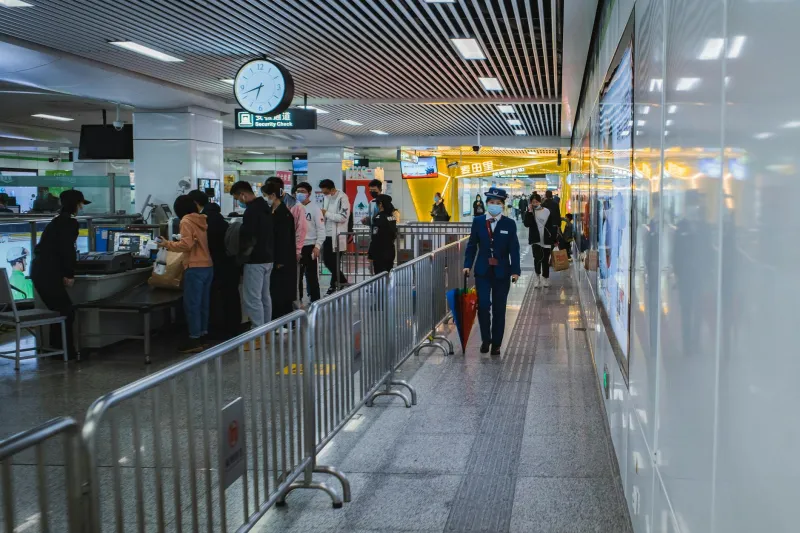
The key insight came from studying airport security lines and British banking queues. Single-file systems, where all customers waited in one line and were served by the next available representative, eliminated the psychological stress of choice while creating a sense of guaranteed progress. Even if the total wait time was identical or slightly longer, customer satisfaction increased dramatically.
Dr. Richard Larson, an MIT operations researcher who studied queuing psychology extensively, identified what he called "the fairness principle" — people's tolerance for waiting increased exponentially when they believed the system was treating everyone equally. The single queue guaranteed first-come, first-served service, eliminating the anxiety of watching other lines move faster.
The Fast Food Laboratory
The first major test of psychological queuing came in fast food restaurants, where customer turnover was crucial and wait time complaints were driving people to competitors. McDonald's and Wendy's began experimenting with single-queue systems in high-traffic locations during the late 1960s.
The results surprised even the researchers. Total service times often increased slightly due to the additional time needed to direct customers to available registers, but customer complaints about waiting dropped by more than 60%. More importantly, customers were more likely to return to restaurants with single-queue systems, even when they consciously recognized that the waits were longer.
The psychological mechanism was elegant in its simplicity. In traditional multiple-line systems, customers spent mental energy constantly evaluating their position relative to others, calculating whether they should switch lines, and growing frustrated when their calculations proved wrong. Single queues eliminated this cognitive load, allowing customers to simply wait without the stress of decision-making.
The Banking Revolution
Banks adopted single-queue systems more slowly, partly because the traditional model of individual teller lines was deeply embedded in banking culture. Customers expected to choose their teller, and tellers developed relationships with regular customers who preferred their service.
But by the 1970s, banks were facing the same customer satisfaction crisis that had affected retailers. The solution came through what banking consultants called "managed queuing" — single lines that still allowed customers to request specific tellers when they reached the front, but eliminated the anxiety of choosing the wrong line initially.
The transformation was remarkable. Banks that implemented single-queue systems reported not just higher customer satisfaction, but increased transaction volumes. Customers who had previously avoided banks during busy periods began returning, confident that they would be served fairly regardless of when they arrived.
The Psychology of Perceived Control
The success of single-queue systems revealed something fundamental about human psychology and control. Customers didn't actually want control over their wait experience — they wanted predictability and fairness. The illusion of control provided by choosing your own line created more stress than satisfaction when that control led to poor outcomes.
Researchers identified several psychological principles at work in successful queue design:
Occupied Time Feels Shorter: Single lines allowed businesses to provide distractions — magazines, television screens, or product displays — that made wait times feel shorter.
Uncertain Waits Feel Longer: Knowing your exact position in line and seeing steady progress reduced anxiety compared to guessing whether your chosen line would move efficiently.
Unfair Waits Feel Longer: The guaranteed first-come, first-served nature of single queues eliminated the frustration of watching later arrivals get served first in faster-moving adjacent lines.
The Modern Queue as Theater
Today's American queuing systems are carefully engineered psychological experiences designed to manage emotions rather than optimize pure efficiency. The serpentine lines at airports, the numbered ticket systems at delicatessens, and the single-file queues at coffee shops all prioritize customer satisfaction over raw throughput.
Modern queue design incorporates elements that would seem counterproductive from a pure efficiency standpoint: longer walking distances through serpentine barriers, digital displays that provide wait time estimates, and even deliberate delays that allow customers to mentally prepare for their transaction.
The goal isn't to move people as quickly as possible — it's to make the wait feel reasonable, fair, and predictable. The line you stand in at Starbucks could probably move faster if it were redesigned purely for speed, but it would create more customer frustration and fewer return visits.
The Unintended Consequences
The psychological engineering of American queues has had broader cultural effects beyond customer satisfaction. The single-queue system has trained Americans to expect fairness and predictability in ways that extend beyond commercial transactions. The same principles now govern everything from voting procedures to theme park attractions to government services.
But this system has also created new forms of anxiety. Americans traveling to countries with different queuing cultures — where cutting in line might be acceptable or where multiple queues are still standard — often experience disproportionate stress because their expectations for fairness and predictability aren't met.
The Line as Social Contract
The American queue system represents more than efficient service design — it's a social contract that promises fairness, predictability, and equal treatment. When you stand in line today, you're participating in a carefully engineered psychological experience designed not to get you served faster, but to make you feel better about the time you spend waiting.
That single-file line isn't evidence of American efficiency. It's evidence of American anxiety about fairness, control, and predictability — and the remarkable lengths businesses will go to manage those emotions rather than simply providing faster service. The next time you wait in line, you're not just waiting to be served. You're experiencing the result of decades of psychological research designed to make waiting feel like progress, even when it isn't.