The Button That Lies: Why Your Elevator's 'Door Close' Switch Stopped Working Decades Ago
The Daily Deception
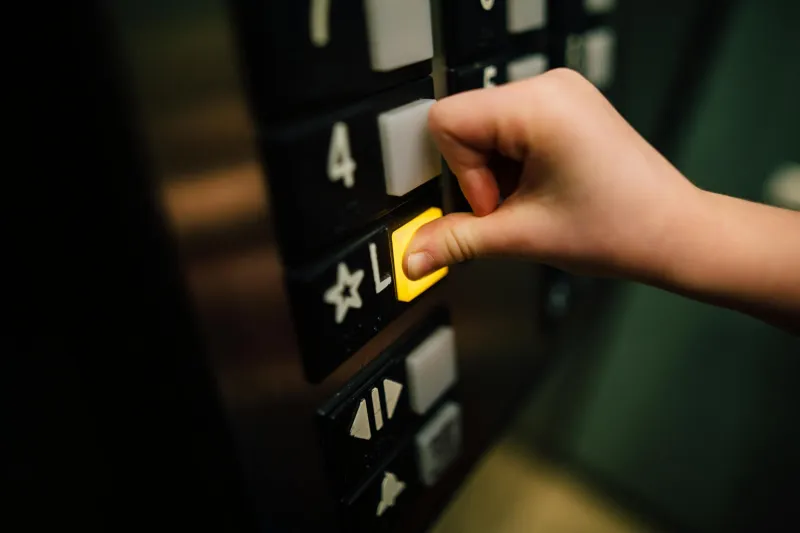
You're running late for a meeting. The elevator doors begin their leisurely close, and you desperately stab the 'Door Close' button. Nothing happens. You press it again, harder this time, convinced the elevator is ignoring your urgent request.
Here's the truth: it probably is.
Across America, the vast majority of 'Door Close' buttons in elevators are as functional as a chocolate teapot. They've been deliberately disconnected, disabled, or programmed to do absolutely nothing. Yet we keep pressing them, millions of times a day, in one of the most widespread examples of placebo design in modern American life.
When Buttons Became Broken by Law
The story begins in 1990 with the Americans with Disabilities Act. While the ADA transformed accessibility across the country, it had an unexpected side effect on elevator design. The law mandated that elevator doors must remain open for a minimum amount of time—typically between 5 and 20 seconds—to ensure people with disabilities have adequate time to enter or exit.
Suddenly, building managers faced a choice: rewire expensive elevator systems to comply with new timing requirements, or simply disconnect the 'Door Close' buttons entirely. For most, the math was simple. Disabling a button cost nothing. Reprogramming elevator systems could cost thousands.
"It was easier to just cut the wire," explains elevator technician Mike Rodriguez, who has serviced buildings in Chicago for over two decades. "The button stays there, people feel better pressing it, and the building stays compliant with ADA timing requirements."
The Psychology of Fake Control
But why keep the button at all? The answer lies in what psychologists call the "illusion of control"—our deep-seated need to feel we can influence our environment, even when we can't.
Elevator manufacturers discovered something fascinating: removing 'Door Close' buttons entirely made people anxious and frustrated. Complaints skyrocketed. But leaving the button in place, even when it did nothing, kept riders calm. The simple act of pressing a button—any button—satisfied our psychological need to "do something" during those awkward elevator moments.
"It's like a pacifier for adults," says Dr. Sarah Chen, a behavioral psychologist at Northwestern University who has studied urban design psychology. "The button provides a sense of agency in a space where we actually have very little control."
America's Hidden World of Placebo Buttons
The elevator 'Door Close' button isn't alone in its deception. Across American cities, a surprising number of everyday controls are elaborate psychological theater:
Crosswalk buttons in major cities like New York often do nothing during peak hours, when traffic lights run on fixed timers. Press all you want—you're not changing the light cycle.
Office thermostats are frequently locked or set to ignore small adjustments, especially in large buildings with central climate control. That dial you turn might register your input but won't change the temperature by a single degree.
"Close Door" buttons on subway trains in cities like Washington D.C. are often disabled during rush hour to prevent passengers from interfering with carefully timed schedules.
Even some car door locks on newer vehicles are programmed to ignore rapid successive presses, treating them as accidental inputs rather than urgent security requests.
The Economics of False Control
This isn't malicious design—it's practical engineering meeting human psychology. Real control systems are expensive to maintain and easy to break. A truly responsive 'Door Close' button requires sensors, timers, safety overrides, and regular calibration. A fake button needs only the plastic housing and our willingness to believe.
Building managers learned that the cost of maintaining functional buttons often exceeded any benefit. Broken buttons generate service calls, complaints, and liability issues. Placebo buttons generate none of these problems while providing the same psychological comfort.
"We had elevators where people would press the 'Door Close' button so aggressively they'd break it within months," recalls Janet Morrison, a property manager in downtown Seattle. "Now we just disconnect them from day one. Nobody complains because they don't know."
When Buttons Actually Work
Not every 'Door Close' button is a fake. Fire service elevators, freight elevators, and elevators in smaller buildings often maintain functional buttons. The key difference is usually building size and management complexity.
In newer buildings, some elevators use "smart" systems that recognize authorized users—like maintenance staff with special keys—and activate the 'Door Close' function only for them. Regular passengers get the placebo experience.
Elevator industry insiders have developed their own informal tests. "If you hold the button for more than three seconds and nothing happens, it's probably disconnected," Rodriguez explains. "Real buttons usually respond within two seconds."
The Comfort of Illusion
Perhaps the most remarkable aspect of this widespread deception is how little it bothers us once we know. Studies show that even people aware their 'Door Close' button doesn't work continue pressing it. The physical action itself provides psychological relief, regardless of its effectiveness.
This reveals something profound about how we interact with technology: sometimes the feeling of control matters more than actual control. In an elevator—a small box that carries us between floors with no input from us—any semblance of agency feels better than admitting we're completely passive passengers.
The next time you're in an elevator, watch how people interact with that 'Door Close' button. Notice the urgency, the repeated pressing, the slight frustration when doors don't respond immediately. You're witnessing one of America's most successful design deceptions in action—a button that works perfectly by not working at all.
In our increasingly automated world, perhaps we need these small illusions of control. The 'Door Close' button isn't broken—it's doing exactly what it was designed to do: make us feel better about the ride.