The Plaster That Never Came
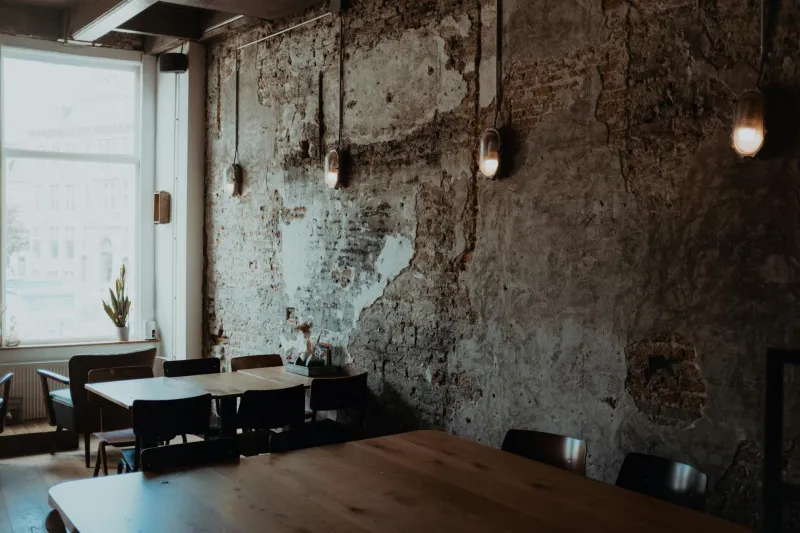
Walk into any trendy restaurant in Brooklyn, Portland, or Austin, and you'll find the same design choice staring back at you: exposed brick walls. Raw, unfinished, deliberately industrial. The aesthetic screams authenticity, creativity, urban grit. What it doesn't scream is the truth — that this beloved design element was originally considered such an eyesore that builders would go to great lengths to cover it up.
The story begins in 1887 Chicago, where contractor James McKinnon was facing a problem that would be familiar to anyone who's ever renovated a home. His crew had just finished the brick walls of a new warehouse when they discovered their plaster budget had evaporated. The client wanted the building finished on schedule, the workers needed to be paid, and McKinnon was stuck with walls that looked, in his words, "like the inside of a chimney."
The Cover-Up That Wasn't
For decades, exposed brick had been the mark of unfinished construction. Proper buildings had plastered walls, painted surfaces, decorative moldings. Brick was what you saw in factories, stables, and the backs of buildings where nobody important would look. McKinnon's warehouse was supposed to house a printing operation, not showcase industrial architecture.
But McKinnon made a decision that would ripple through American design for the next century: he left the walls alone. Not because he thought they looked good, but because he literally couldn't afford to finish them. The printing company moved in anyway, and something unexpected happened. Visitors kept commenting on the walls.
"There's something honest about it," one businessman wrote in his diary after visiting the facility. "No pretense, no decoration trying to be something it's not."
From Shame to Chic
By the 1920s, what had started as McKinnon's budget crisis was becoming a deliberate choice. Artists moving into abandoned warehouses and factories discovered that exposed brick provided the perfect backdrop for their work. The rough texture absorbed sound, the warm red tones complemented both paintings and sculptures, and the industrial feel aligned with the era's fascination with modern machinery.
New York's SoHo district became ground zero for the transformation. Artists couldn't afford traditional studio spaces, so they moved into former manufacturing buildings where the brick walls came pre-exposed. Gallery owners following the artists discovered that the industrial aesthetic made contemporary art look more serious, more authentic, more connected to the working-class roots of creativity.
The Restaurant Revolution
The real turning point came in the 1960s when restaurant designers began deliberately exposing brick walls that had been covered for decades. The logic was simple: exposed brick suggested a connection to honest, traditional cooking methods. Bread ovens, pizza ovens, even regular kitchens seemed more authentic when surrounded by the same materials that had been used in cooking for centuries.
Restaurant consultant Maria Gonzalez, who advised dozens of establishments during the 1970s, explained the psychology: "People wanted to feel like they were eating somewhere real, somewhere with history. A brick wall told a story that drywall never could."
The Loft Living Fantasy
As urban renewal projects demolished old manufacturing districts, developers discovered they could market former factory spaces as luxury housing. The exposed brick that had once embarrassed builders like McKinnon became the selling point. Advertisements promised "authentic loft living" and "industrial chic."
The irony was perfect: Americans were paying premium prices to live in spaces that looked unfinished, in buildings that had been considered unsuitable for human habitation just decades earlier. The exposed brick walls that represented poverty and industrial labor were now symbols of sophisticated urban taste.
Coffee Shop Culture
The final step in exposed brick's cultural conquest came with the coffee shop revolution of the 1990s. Starbucks and its imitators discovered that exposed brick walls created the perfect atmosphere for the "third place" experience they were trying to sell. The walls suggested authenticity, craftsmanship, and connection to traditional coffee roasting methods.
Independent coffee shops took the aesthetic even further, often going to great expense to expose brick walls that had been covered for decades. The same walls that contractors had once been embarrassed to leave uncovered were now being artificially aged and distressed to achieve the perfect look of industrial authenticity.
Why It Stuck
Today, exposed brick remains one of America's most popular interior design choices, spanning everything from high-end restaurants to startup offices to luxury apartments. The aesthetic that began with McKinnon's budget crisis has become so associated with authenticity and creativity that developers now build fake exposed brick walls in brand-new buildings.
The persistence of exposed brick reveals something fundamental about American culture: our complicated relationship with industrialization, our desire for authenticity in an increasingly artificial world, and our ability to transform yesterday's embarrassments into tomorrow's aspirations. What started as a contractor's mistake became the foundation of how Americans think about honest, unpretentious design.
Every time you see those familiar red walls in a restaurant or coffee shop, you're looking at the legacy of James McKinnon's budget crisis — a reminder that sometimes the most enduring design choices are the ones nobody planned at all.