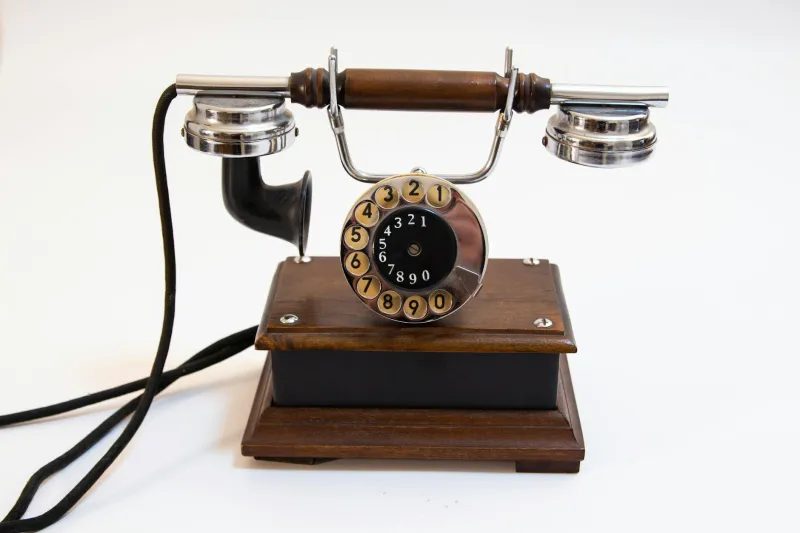
The List That Started Everything
On February 21, 1878, the New Haven District Telephone Company published what would become one of America's most enduring institutions: the telephone directory. All one page of it.
 Photo: New Haven, via image.shutterstock.com
The inaugural phone book was essentially a handwritten list of 50 names—local doctors, businesses, and the handful of wealthy residents who could afford the new contraption Alexander Graham Bell had patented just two years earlier. But here's the thing that would confuse any modern reader: there wasn't a single phone number in sight.
 Photo: Alexander Graham Bell, via static.faqabout.me
That's because in 1878, you didn't dial numbers. You picked up the phone and told the operator, "Connect me to Dr. Baldwin," or "I need the pharmacy, please." The operator—invariably a young woman who had memorized every subscriber in town—would physically plug your line into the right socket on her switchboard. The phone book wasn't a directory of numbers; it was a menu of who was worth calling.
When Memory Was the Network
Those early operators were the living, breathing internet of their time. In small towns, a single operator might handle 200 or 300 subscribers, keeping track of not just their names but their daily schedules, family emergencies, and social connections. Need to reach someone who wasn't home? The operator knew they were probably at their sister's house on Elm Street. Looking for the doctor? She'd tell you he was making rounds and offer to track him down.
This system worked beautifully—until it didn't. As telephone adoption exploded in the 1880s and 1890s, operators found themselves overwhelmed. Cities that started with one switchboard operator suddenly needed dozens. The cozy, personal service that made early phone systems feel like extended family conversations began breaking down under sheer volume.
The Numbers Game
The solution came from an unlikely source: Almon Brown Strowger, an undertaker in Kansas City who was convinced the local telephone operator was routing calls meant for him to his competitor (who happened to be married to said operator). In 1891, Strowger invented the automatic telephone exchange—a mechanical system that let callers dial numbers directly, cutting operators out of the equation entirely.
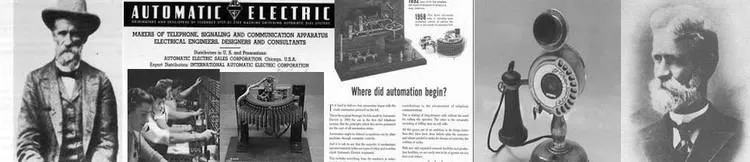 Photo: Almon Brown Strowger, via alchetron.com
Suddenly, phone books needed numbers. But this created a new problem: how do you organize a city's worth of people in a way that makes sense? Early attempts were chaotic. Some companies assigned numbers by the order people signed up. Others grouped them by neighborhood. A few tried to make numbers correspond to street addresses, which worked until someone moved.
The alphabetical white pages system we remember didn't emerge until the 1910s, and it took another decade for the format to standardize across the country. By then, phone books had evolved from simple subscriber lists into thick civic documents that told the story of American communities.
The Ritual of Looking Up
For most of the 20th century, "looking someone up in the phone book" became one of those mundane rituals that defined American life, like checking the mailbox or consulting TV Guide. Phone books grew into massive tomes—New York City's 1980 directory topped 2,000 pages and weighed nearly 10 pounds.
But the phone book was never just about phone numbers. The white pages became a census of sorts, documenting who lived where and how they wanted to be found. The yellow pages turned into the primary way Americans discovered local businesses. Real estate agents used phone books to prospect neighborhoods. Genealogists relied on them to trace family histories. Teenagers used them to look up crushes.
The humble phone book also served as furniture (who didn't use one as a booster seat?), doorstop, kindling, and—in a pinch—weapon. Phone book pages made excellent packing material and emergency fire starters. Rural communities sometimes had phone book throwing contests. The annual delivery of new directories became a seasonal marker, like the first snow or spring cleaning.
The Great Disappearing Act
Then, almost overnight, it all vanished.
The decline started gradually in the 1990s as online directories and caller ID reduced the need to look up numbers. But the real death blow came with smartphones. Why flip through pages when you could just say "Call Mom" or "Find pizza near me"?
By 2010, most Americans under 30 had never used a physical phone book. Entire generations grew up without learning the finger-walking technique of scanning columns of tiny print. The ritual of letting your fingers do the walking—a slogan that had defined Yellow Pages advertising for decades—became as obsolete as cranking a car engine.
Phone companies began scaling back production. Verizon stopped printing residential white pages in 2011. AT&T followed suit in most markets by 2015. Today, the few phone books still published are mostly yellow pages directories targeting older demographics and businesses without strong online presence.
What We Lost in Translation
The phone book's disappearance represents more than just technological progress—it marked the end of a particular kind of community knowledge. Those thick directories were democratic documents that treated the millionaire and the minimum-wage worker with equal billing. Everyone got the same four-line listing, the same chance to be found.
Modern digital directories are different beasts entirely. They're searchable and instantly updated, but they're also controlled by algorithms that prioritize paid listings and popular results. They know more about you than any operator ever did, but they're less likely to help you find the neighbor whose dog got loose or the local handyman who doesn't advertise online.
The phone book also represented a kind of social contract about privacy and accessibility that we're still figuring out in the digital age. Your listing was public by default, but you could pay a small fee to go unlisted if you wanted privacy. Everyone understood the rules, and the rules applied to everyone equally.
The Last Page
The story of the phone book is really the story of how Americans learned to navigate an increasingly connected world. It started as a simple list of who was worth talking to and evolved into a comprehensive guide to community life. For over a century, it was how we answered the fundamental question: "How do I reach you?"
Today, that question has become infinitely more complex. We have dozens of ways to contact each other—phone, text, email, social media, messaging apps—but no single directory that maps them all. We've traded the democratic simplicity of the phone book for the algorithmic complexity of the internet, gaining convenience but losing something harder to define.
Somewhere in New Haven, that first 50-name phone book started a ritual that defined American life for 130 years. Its disappearance happened so quietly that most people didn't notice until it was already gone—a fitting end for something that was always more about connection than technology.