How a 19th Century Tea Gimmick Taught Americans to Shop With Their Hearts
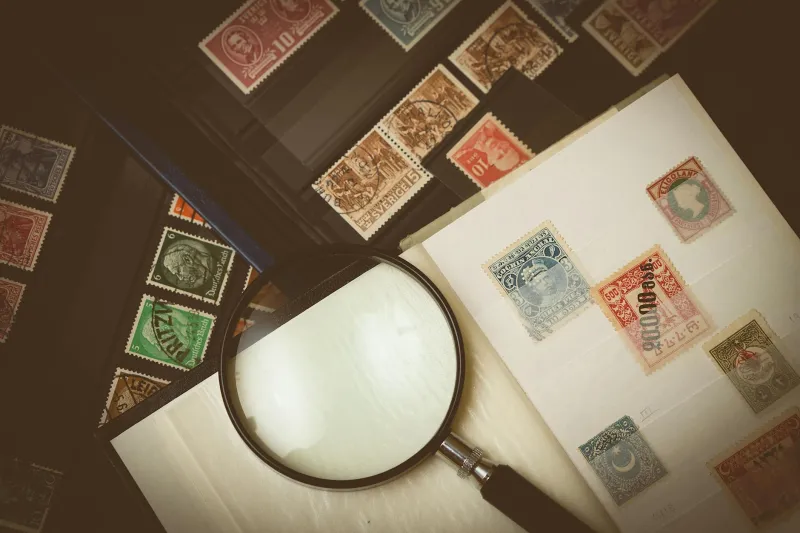
The Lick That Changed Everything
In 1962, housewife Betty Johnson walked into her local Piggly Wiggly in suburban Detroit and did something that would have baffled her grandmother: she chose the more expensive brand of laundry detergent. Not because it cleaned better, but because it came with more little green stamps.
Those stamps—perforated rectangles no bigger than a postage stamp—were about to rewrite the American relationship with money, value, and desire. At their peak, S&H Green Stamps were being licked, stuck, and collected by 84% of American households. The company was printing three times more stamps than the U.S. Postal Service and running the largest catalog operation in the country.
But here's the thing nobody saw coming: those innocent-looking stamps weren't just building brand loyalty. They were conducting the largest behavioral psychology experiment in American history.
From Tea Leaves to Retail Revolution
The story begins not in post-war suburbia, but in 1896 with a traveling salesman named Thomas Sperry. Sperry had noticed something clever that tea merchants were doing—offering small premiums and certificates to encourage repeat purchases. It was an old trick, dating back to the 1850s, but Sperry saw bigger possibilities.
He partnered with Shelley Byron Hutchinson to create the Sperry & Hutchinson Company, and together they launched what seemed like a simple idea: give customers stamps based on their purchase amount, let them collect the stamps in books, then redeem full books for merchandise.
What they'd actually invented was a time-release dopamine delivery system.
The Psychology of the Partial Reward
Here's where it gets interesting from a behavioral standpoint. Traditional discounts give you immediate gratification—buy this, save money now. But Green Stamps did something more insidious: they made the reward feel both earned and delayed.
Every purchase became a small victory. Every stamp book that was almost full created a sense of incomplete achievement that demanded resolution. Psychologists would later recognize this as a variable ratio reinforcement schedule—the same mechanism that makes slot machines addictive.
But in 1950s America, it just felt like smart shopping.
The Catalog That Rewired Desire
By the 1960s, the S&H catalog had become the most widely distributed publication in America after the Sears catalog. Families gathered around kitchen tables, flipping through pages of toasters, lawn mowers, and fishing rods, calculating how many more stamps they needed.
The genius wasn't just in the products—it was in how the system reframed spending. A $20 appliance didn't cost $20; it cost "12 books of stamps." Money became abstract. The pain of spending was replaced by the pleasure of collecting.
Mary Patterson of Toledo, Ohio, became legendary in her neighborhood for furnishing her entire living room with stamp redemptions. "I never felt like I was spending money," she told a local newspaper in 1965. "I was just shopping smarter."
The Math That Made Millions
The economics were brilliant in their simplicity. Retailers paid S&H roughly 2-3% of their sales for the stamps. Customers needed to spend about $1,200 to fill enough books for a $30 toaster—a redemption rate that made the math work beautifully for everyone involved.
Except for one small detail: not everyone redeemed their stamps.
S&H discovered what modern loyalty programs know well—breakage is profitable. Busy families moved, lost interest, or never quite finished that last book. The company kept detailed actuarial tables tracking redemption patterns, essentially running an early version of the predictive analytics that power today's rewards programs.
The Decline and Digital Rebirth
By the 1970s, the magic was fading. Credit cards were becoming mainstream, offering immediate purchasing power without the need to collect anything. Discount retailers like Walmart were proving that everyday low prices beat delayed gratification.
S&H tried to adapt—launching a short-lived credit card, testing electronic redemption systems, even experimenting with online catalogs in the early days of the internet. But the cultural moment had passed.
The last major Green Stamps redemption center closed in 2020, ending an era that had quietly taught three generations of Americans to associate spending with reward collection.
The Legacy in Your Wallet
Walk into any Starbucks today and watch customers tap their phones to collect stars. Check your credit card statement and count the cashback categories. Open any shopping app and notice the progress bars, streak counters, and tier systems.
They're all descendants of those little green stamps.
The psychology S&H discovered—that people will change their behavior for small, delayed rewards—now powers a trillion-dollar loyalty industry. Amazon Prime, airline miles, grocery store apps—they're all running variations of the same playbook that Thomas Sperry sketched out in 1896.
The Enduring Power of the Collection Impulse
What S&H Green Stamps revealed about human nature wasn't just that we like free stuff—it's that we'll work harder for something we have to collect than something we can simply buy. The act of accumulating, of building toward a goal, of completing a set, triggers something deeper than rational economic behavior.
In a culture that was rapidly moving toward instant gratification, Green Stamps proved that delayed satisfaction could be even more powerful—if you gamified the delay.
Today, as we swipe our way through a dozen loyalty programs, we're still playing the same game Betty Johnson played in that Detroit grocery store. We're still choosing the more expensive option because it comes with more points, more miles, more stars.
We're still licking stamps, even when there are no stamps left to lick.