The Woman Who Taught America's Roads to Speak — Without Ever Learning to Drive
The Designer Behind the Dashboard
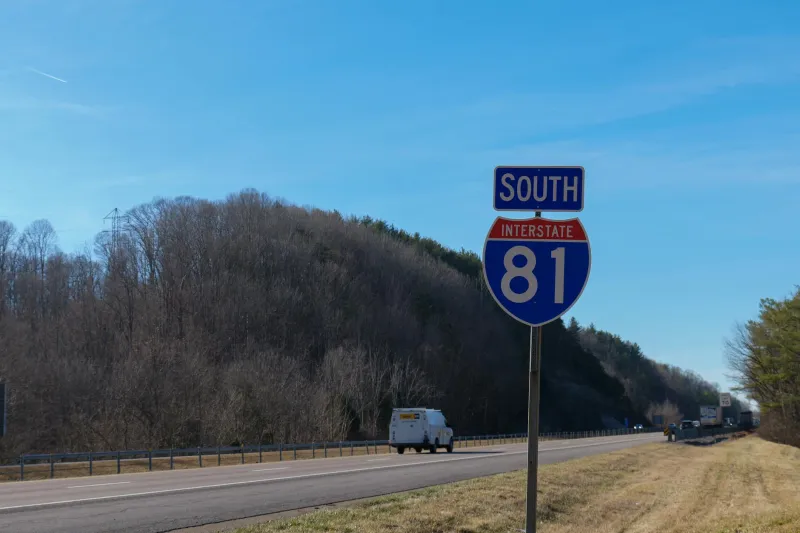
Every time you glance up at a green highway sign pointing toward your exit, or spot a yellow warning triangle, or read white text against a blue background directing you to services, you're experiencing the work of someone who rarely sat in the driver's seat herself.
Margery Cantor was a graphic designer working for the Federal Highway Administration in the 1940s and 1950s when America was about to embark on the largest public works project in its history: the Interstate Highway System. While engineers were calculating grades and surveying routes, Cantor was solving a different puzzle entirely — how to make roads readable at 70 miles per hour.
The Problem Nobody Saw Coming
Before the interstate system, American road signage was chaos. Each state, county, and municipality had its own approach. Some used hand-painted wooden signs. Others preferred metal placards with elaborate serif fonts. Colors varied wildly — red might mean danger in one state and directions in another.
This patchwork system worked fine when most trips were local and speeds were modest. But President Eisenhower's vision of a coast-to-coast highway network would create an entirely new challenge: drivers traveling hundreds of miles through unfamiliar territory at unprecedented speeds.
The Federal Highway Administration realized they needed more than just consistent messaging — they needed a visual language that could be processed instantly by drivers who might be seeing a location name for the first time while managing a two-ton vehicle at highway speeds.
Reading at 70 MPH
Cantor approached the problem like a cognitive scientist decades before that field existed. She understood that highway signs weren't just informational — they were split-second communication devices operating under extreme constraints.
Working with a small team of designers and early human factors researchers, Cantor began testing everything: font sizes, letter spacing, color combinations, and symbol recognition. They discovered that certain typefaces became illegible at distance and speed, while others maintained clarity. They found that some color combinations created optical vibration that made text appear to shimmer.
The green background that now signals directions and destinations? That emerged from extensive testing showing it provided the highest contrast with white lettering while remaining visible in various lighting conditions. The distinctive blue background for service signs came from research showing drivers could distinguish it from directional signage even in peripheral vision.
The Irony of Expertise
Here's what makes Cantor's story remarkable: she was designing for an experience she barely understood firsthand. Born in 1915, she came of age when car ownership was still relatively uncommon, especially for women. Even as her career progressed, she remained primarily a public transit user, occasionally riding as a passenger but rarely driving herself.
This apparent disadvantage may have been her greatest asset. While engineers and transportation officials thought about highways from the perspective of traffic flow and construction logistics, Cantor approached signage as a pure communication problem. She wasn't influenced by driving habits or assumptions about what felt "natural" behind the wheel.
Instead, she treated highway signage like any other graphic design challenge: How do you convey complex information clearly and quickly to people who can't stop to study it?
Building a Visual Grammar
Cantor's team didn't just design individual signs — they created an entire visual grammar for American roads. They established that shape would indicate sign function: rectangles for information, diamonds for warnings, octagons for stops. They determined that certain colors would always mean specific things: yellow for caution, red for prohibition, white for regulation.
They even designed the logic for how information should be prioritized on complex signs. The most critical information — like interstate numbers — got the largest, boldest treatment. Secondary information like distances received smaller text. Optional details like alternate routes were relegated to the bottom.
This systematic approach meant that once drivers learned the visual language in one state, they could navigate confidently anywhere in the country.
The System That Outlasted Its Era
Cantor's design principles proved so effective that they've remained largely unchanged for over 60 years. The Manual on Uniform Traffic Control Devices, which codifies her visual standards, is still the bible for American road signage.
But now, those standards face their first major challenge since the interstate era began. Autonomous vehicles don't need to read signs the way humans do — they navigate by GPS and digital mapping. Meanwhile, human drivers are increasingly distracted by smartphones and in-vehicle entertainment systems, potentially requiring even more aggressive visual design to capture attention.
The Future of the Road
Transportation officials are quietly beginning to update Cantor's system for the 21st century. New signs incorporate QR codes for detailed information. Some experimental designs use LED elements for dynamic messaging. There's even discussion of signs that could communicate directly with connected vehicles.
Yet the fundamental principles Cantor established — high contrast, simple shapes, consistent color logic — remain the foundation. Her insight that road signage should function as instant communication rather than detailed instruction continues to guide designers working on everything from smart highway systems to parking apps.
The woman who taught America's roads to speak may never have experienced highway driving herself, but she understood something more important: the difference between information and communication. Every time you navigate confidently down an unfamiliar interstate, you're benefiting from the work of someone who solved the puzzle of high-speed visual communication without ever feeling the need to test-drive the solution herself.