The Motel Was Built for People Who Didn't Want to Check In — And That Became Its Superpower
The Problem With Hotels in 1925
If you wanted to stay overnight somewhere in America in the early 1920s, you had a problem. Hotels required you to park your car somewhere else, carry your luggage through a lobby full of strangers, sign a register that anyone could read, and make small talk with a desk clerk who might remember your face.
For a country that was falling in love with the automobile, this felt increasingly ridiculous. Cars promised freedom and independence, but hotels still operated like they were built for stagecoach travelers who expected — and wanted — social interaction.
Arthur Heineman saw the disconnect. A architect working in California, he watched as more Americans bought cars and started driving longer distances. They wanted to travel, but they didn't want the hassle of traditional hotels. More importantly, they didn't want the scrutiny.
The First Motel Was About Privacy, Not Convenience
In 1925, Heineman opened the Milestone Mo-Tel in San Luis Obispo, California. The name was a mashup of "motor" and "hotel," but the concept was something entirely different. Instead of a central lobby, guests drove directly to their rooms. Instead of signing a register in public, they handled check-in privately. Instead of carrying bags through hallways, they unloaded directly at their door.
The design wasn't just about convenience — it was about anonymity. Heineman understood that Americans wanted to travel without having to explain themselves to anyone. The motel let them do exactly that.
The rooms were arranged in a line, each with its own parking space directly in front. You could pull up, grab your key, and disappear behind your door without encountering another human being. For travelers who valued privacy over luxury, it was perfect.
Why Americans Wanted to Disappear
The timing wasn't accidental. The 1920s were a decade of social change in America. Prohibition had made many previously legal activities illegal, but it hadn't made them unpopular. Young people were challenging traditional moral codes. Women were gaining independence. And all of this was happening while more Americans than ever could afford cars.
The motel offered something that hotels couldn't: the ability to travel without judgment. A couple could take a weekend trip without having to explain their relationship status to a hotel clerk. A businessman could make an unscheduled stop without anyone knowing where he'd been. A family could travel without having to dress up for a hotel lobby.
This wasn't just about convenience — it was about freedom from social expectations.
The Architecture of Independence
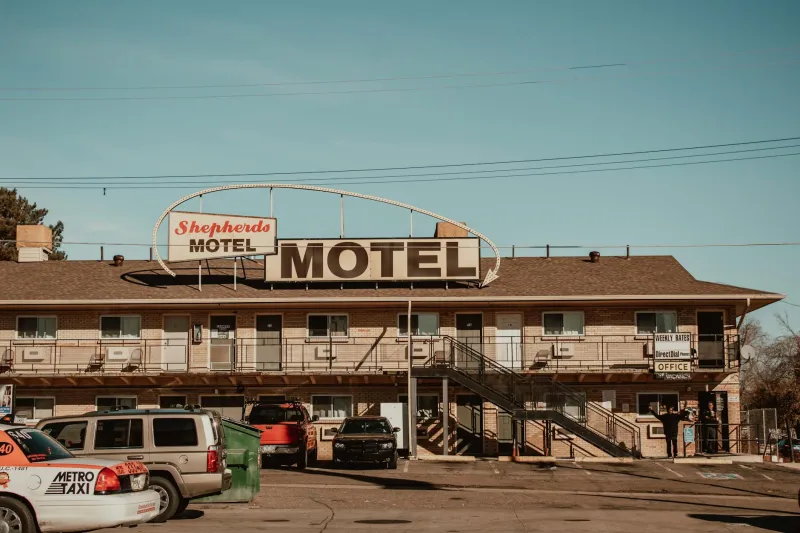
Everything about early motel design reinforced this sense of autonomy. Rooms opened directly to the parking lot, not to interior hallways. Windows faced away from other rooms to maximize privacy. Many motels were built in L-shapes or U-shapes, creating small courtyards that felt separate from the road.
The office was typically small and positioned so guests could check in quickly without lingering. There were no grand lobbies, no restaurants where you might run into other guests, no communal spaces where conversation was expected.
This architectural philosophy spread across the country as more entrepreneurs recognized what Heineman had discovered: Americans wanted to travel, but they wanted to do it on their own terms.
How the Motel Became Uniquely American
While other countries developed their own forms of roadside accommodation, the American motel remained distinct because it prioritized individual privacy over communal experience. European pensions and inns maintained social elements — shared meals, common rooms, interaction between guests and hosts. The American motel eliminated all of that.
This reflected something deeper about American culture in the automobile age. The car wasn't just transportation — it was a private space that extended the home. The motel was designed to extend that privacy even further, creating temporary homes where travelers could maintain their independence.
By the 1950s, motels had evolved into elaborate themed destinations, but they retained their core promise: you could check in without checking out of your own life.
The Complicated Legacy
The motel's emphasis on privacy eventually created problems. The same anonymity that appealed to legitimate travelers also attracted people engaging in activities they wanted to hide. By the 1960s and 1970s, many motels had developed reputations that their original designers never intended.
But the core insight remained valuable. Americans wanted accommodation that respected their independence and privacy. This philosophy influenced everything from the rise of extended-stay hotels to the design of modern chain motels that still prioritize direct room access and minimal social interaction.
The Motel's DNA in Modern Travel
Today's successful hotel chains still incorporate lessons from Heineman's original motel. Many offer mobile check-in to minimize front desk interaction. Extended-stay properties feature separate entrances and kitchenettes that reduce dependence on hotel services. Even luxury hotels now market their ability to provide privacy and independence alongside traditional amenities.
The motel succeeded because it solved a uniquely American problem: how to travel without giving up the independence that the automobile had promised. In a country that valued individual freedom over communal experience, the motel offered the perfect solution — a place where you could be completely alone, even when you were away from home.
That original promise of privacy and independence, first offered at the Milestone Mo-Tel in 1925, remains the foundation of how Americans prefer to travel nearly a century later.