She Expected the Chocolate to Melt. It Didn't. The Rest Is Baking History.
She Expected the Chocolate to Melt. It Didn't. The Rest Is Baking History.
There's a version of this story where Ruth Wakefield is a distracted baker who stumbled into greatness by accident. It's a tidy narrative — the kind that makes for a good two-paragraph sidebar in a food magazine. It also undersells her considerably.
The real story of the chocolate chip cookie is about a smart, trained professional who made a practical decision in the middle of a busy kitchen, recognized immediately what she had, and negotiated one of the more unusual deals in American food history. The accident part is real. Everything that came after was not.
The Toll House Inn, 1938
Ruth Graves Wakefield wasn't a home baker dabbling in recipes on weekends. She held a degree in household arts from the Framingham State Normal School, had worked as a dietitian, and co-owned a working inn with her husband Kenneth on Route 18 between Boston and New Bedford, Massachusetts. The Toll House Inn had a genuine reputation for its food — guests came specifically to eat there, and Ruth ran the kitchen with professional standards.
One afternoon in 1938, she was preparing a batch of Butter Drop Do cookies, a standard recipe of the era that called for melted baker's chocolate folded into the dough. She reached for her usual chocolate and found she was out.
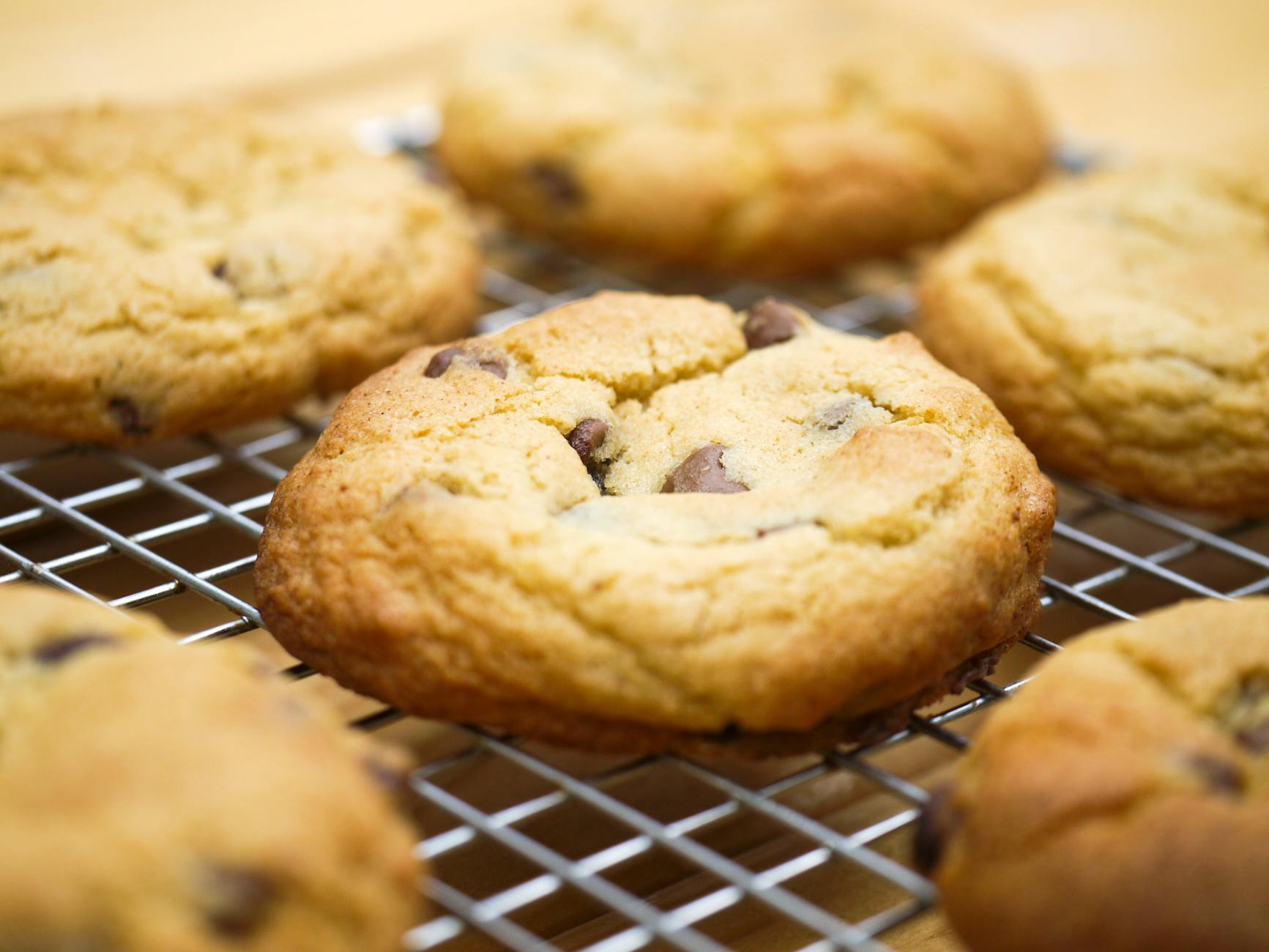
What she had on hand was a semi-sweet Nestlé chocolate bar. She broke it into small pieces, mixed them into the dough, and put the cookies in the oven — expecting, reasonably enough, that the chocolate would melt and distribute evenly through the batter the way melted chocolate would.
It didn't. The pieces softened but held their shape, leaving distinct pockets of chocolate embedded in the baked cookie.
She tasted one. And instead of starting over, she put them on the menu.
Why the "Accident" Label Misses the Point
Every retelling of this story emphasizes the accident, which is fair — the chemistry didn't behave the way Wakefield anticipated. But the more interesting decision came right after the oven door opened.
A less confident cook might have written off the batch as a failure. Wakefield recognized that what she had was better than what she'd been trying to make. The contrast between the crisp, buttery cookie and the yielding chocolate pieces created something texturally new — more interesting than a uniformly chocolate cookie, more satisfying than a plain butter cookie. She understood what she was tasting.
She named them Toll House Chocolate Crunch Cookies, published the recipe in a Boston newspaper column, and shared it in her own cookbook. Word spread quickly, particularly across New England. Nestlé, tracking a curious spike in sales of their semi-sweet chocolate bars in Massachusetts, figured out why.
The Deal on the Back of the Bag
The arrangement that followed between Wakefield and Nestlé has been described in various ways over the years — sometimes as a formal contract, sometimes as a simple handshake agreement. What's generally agreed upon is this: Nestlé received the rights to print the Toll House Cookie recipe on their packaging, and Ruth Wakefield received a lifetime supply of Nestlé chocolate.
By 1939, Nestlé had begun scoring their semi-sweet chocolate bars to make them easier to chop into pieces for the recipe. By 1941, they introduced the pre-cut chocolate morsel — the chip as we know it today — specifically to serve the demand the Toll House recipe had created.
The recipe went on the back of every bag of Nestlé Toll House morsels, where it has remained, in largely unchanged form, for over eighty years. It is almost certainly the most-read baking recipe in American history. Estimates suggest it has been used to produce hundreds of billions of cookies.
Ruth Wakefield got chocolate for life. Nestlé got an empire.
What Her Story Actually Reveals
There's a pattern in the history of accidental discoveries that Wakefield's story fits almost perfectly: the accident creates the opening, but recognition creates the outcome. Penicillin wasn't useful because Alexander Fleming left a petri dish near a window — it was useful because he understood what he was looking at when he came back. The Post-it note wasn't a product because Spencer Silver made a weak adhesive — it was a product because Art Fry realized what that adhesive could do.
Wakefield's contribution was the same kind of thing. The chemistry of semi-sweet chocolate not fully melting in cookie dough was not, in itself, a discovery. Her decision to serve those cookies, name them, publish the recipe, and share it publicly — that was the invention.
She also, it's worth noting, never tried to reclaim what she'd given away. There are no records of Wakefield expressing regret about the Nestlé deal, which by any commercial measure was extraordinarily one-sided. She continued running the Toll House Inn until 1966, continued cooking and teaching, and reportedly said in later interviews that she was simply happy people enjoyed the cookies.
A Recipe That Outlasted Everything
The Toll House Inn burned down on New Year's Eve in 1984. The building is gone. Ruth Wakefield died in 1977. The Route 18 site is now occupied by a Wendy's.
But the recipe on the back of the yellow bag is still there — the same one, more or less, that a Massachusetts innkeeper improvised one afternoon when she ran out of baker's chocolate and decided to see what happened next.
Some accidents are worth keeping.