When Every American Address Was Just 'The Blue House by the Blacksmith'
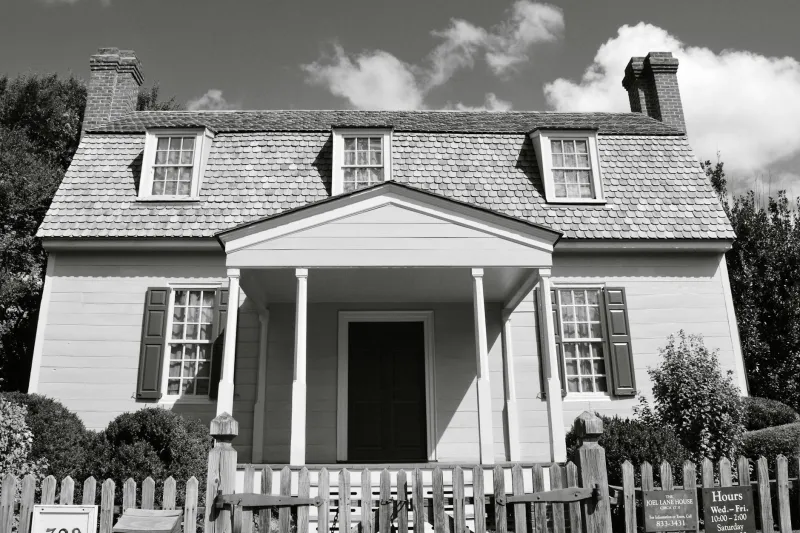
Picture trying to order pizza to "the yellow house with the broken fence, three doors past where Old Murphy used to live, before you get to the creek." For most of American history, that's exactly how people found each other.
The Chaos Before Numbers
In colonial America and well into the 1800s, addresses were more like treasure maps than postal codes. Mail was delivered to taverns, general stores, or prominent citizens who'd sort through letters for their neighbors. If you lived in Boston in 1750, your address might be "near the Liberty Tree" or "opposite the Sign of the Green Dragon."
Cities were small enough that everyone knew everyone, and strangers could ask for directions at every corner. But as American cities exploded in size during the 19th century, this system became a nightmare.
Firefighters couldn't find burning buildings. Doctors missed emergency calls. The postal service, established in 1775, struggled to deliver mail efficiently. Letters routinely took weeks to travel a few city blocks, not because of distance, but because no one could figure out where "Mrs. Henderson who lives near the big oak tree" actually lived.
The Philadelphia Experiment
Philadelphia became the unlikely testing ground for America's first systematic house numbering in 1790. The city had grown so rapidly that even longtime residents got lost in their own neighborhoods. City planners proposed a radical solution: assign every building a unique number.
The idea wasn't entirely new—parts of London had been experimenting with house numbers since the 1760s. But Americans had a different relationship with their government. Many saw numbered addresses as an invasion of privacy, a way for authorities to track and tax citizens more effectively.
"Why should the government catalog where I live?" wrote one Philadelphia resident in a local newspaper. "Next they'll be numbering our children."
The Great Numbering Wars
The debate over house numbers revealed deep tensions about American identity. Supporters argued that numbered addresses would improve commerce, safety, and mail delivery. Opponents saw them as European-style government overreach that threatened the informal, community-based way Americans had always lived.
Some homeowners refused to post numbers, leading to bizarre situations where every other house on a street was numbered. Others posted fake numbers or changed them regularly to confuse tax collectors. In New York, several neighborhoods organized "anti-numbering societies" that met secretly to coordinate resistance.
The postal service became the unlikely hero in this story. Postmaster General Benjamin Rush pushed hard for standardized addresses, arguing that efficient mail delivery was essential for American democracy. How could citizens participate in government if letters from representatives couldn't reach them?
The System Takes Hold
By the 1820s, most major American cities had adopted house numbering, but the systems were wildly inconsistent. Some cities numbered buildings consecutively (1, 2, 3, 4...). Others used odd numbers on one side of the street and even on the other. A few creative municipalities tried alphabetical systems or numbered blocks instead of individual buildings.
The real breakthrough came with the grid system. Cities like New York and Chicago realized they could create logical, expandable numbering schemes by using their street grids. In Manhattan's famous grid plan of 1811, addresses weren't just random numbers—they told you exactly where you were in the city.
This wasn't just convenient; it was revolutionary. For the first time in human history, you could navigate a city you'd never visited using nothing but numbers and street names.
The Holdouts and Rebels
Not everyone embraced the new system immediately. Rural areas resisted house numbers well into the 20th century, with some remote communities only adopting addresses when 911 emergency systems required them in the 1990s.
Even in cities, creative resistance continued. Some Boston residents in the 1800s posted house numbers in Roman numerals to confuse outsiders. Others hung their numbers upside down or painted them in barely visible colors.
The most famous holdout was probably Mark Twain, who lived at "The House with the Fence" in Hartford, Connecticut, long after his neighbors had adopted proper addresses. He claimed that "reducing a home to a number destroys its soul."
The Invisible Infrastructure
Today, house numbers are so fundamental to American life that we rarely think about them. But they represent one of the most successful infrastructure projects in American history—an invisible system that makes everything from pizza delivery to emergency response possible.
The next time you punch an address into your GPS or give directions to a friend, remember that you're using a system that once sparked passionate debates about privacy, government power, and the American way of life. Something as simple as the number on your front door was once considered a radical experiment in urban organization.
In the end, the people who worried that house numbers would make America more impersonal were both right and wrong. Yes, numbered addresses made cities more anonymous and bureaucratic. But they also made them more navigable, more efficient, and more connected to the wider world—qualities that turned out to be pretty American after all.