Edison Hated 'Ahoy.' So Now the Entire World Says Something Else.
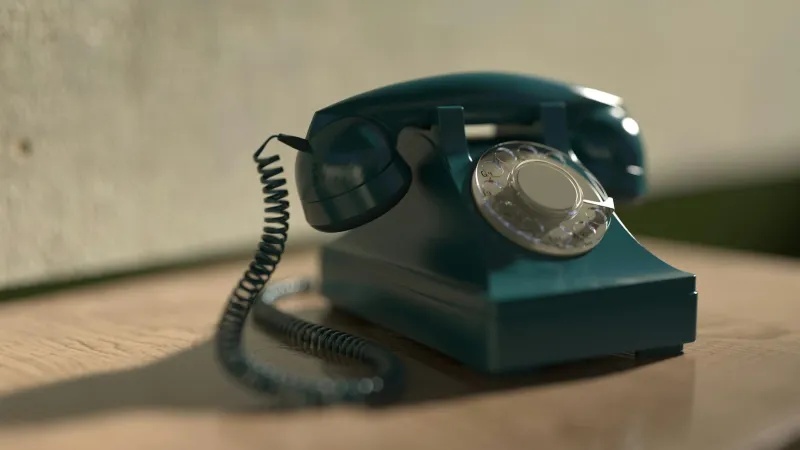
Edison Hated 'Ahoy.' So Now the Entire World Says Something Else.
Think about the last time you answered your phone. You probably said it without thinking — that automatic, almost involuntary syllable that comes out before you've even registered who's calling. Hello. It's so deeply wired into the act of answering a phone that it barely feels like a word anymore. It feels more like a reflex.
Which makes it genuinely strange to learn that nobody said it that way before the telephone existed. And that the man most responsible for making it the universal phone greeting wasn't even the one who invented the phone.
Alexander Graham Bell Had Other Ideas
When Alexander Graham Bell successfully transmitted the first telephone call in 1876, he immediately started thinking about etiquette. How should people begin a call? What was the right word to signal that a connection had been made and someone was ready to speak?
Bell had a strong preference: ahoy. Specifically, ahoy-hoy, a nautical hailing call that sailors had used for centuries to get attention across open water. Bell thought it was crisp, clear, and unmistakably an opener — nobody would confuse it for anything else. He used it himself and advocated for it in his correspondence.
For a brief moment, it looked like ahoy might actually win. Early telephone users experimented with all kinds of openers. Some said are you there? Some said are you ready to talk? Some said nothing and just waited. There was no consensus, no standard, no rulebook. The telephone was brand new, and the social norms around it hadn't been written yet.
That's when Thomas Edison entered the picture.
Edison's Preferred Word
Edison had been working with Bell's telephone technology almost from the beginning, improving the transmitter and developing his own variations. He was also, characteristically, very certain about how things should be done.
In 1877, Edison wrote a letter to the president of the Central District and Printing Telegraph Company in Pittsburgh, who had asked for his thoughts on telephone operating procedures. Edison's response included a specific recommendation: the word to use when opening a call should be hello.
It wasn't a word Edison invented. Hello had existed in the English language for decades, showing up in print as a variant of hallo and hullo, which were themselves variations of older Germanic hailing words. But it was relatively uncommon — more of an exclamation of surprise than a formal greeting. Most people in 1877 would have said hello roughly the way we might say hey today: casually, occasionally, not particularly deliberately.
Edison's argument was practical. Hello was short, punchy, and hard to mishear over the crackling audio quality of early telephone lines. It had a strong vowel sound that carried well. It was unambiguous. And critically, it wasn't being used for anything else — it didn't carry the baggage of good morning or how do you do, which implied a social exchange rather than a functional one.
The Operators Who Made It Official
Edison's recommendation might have stayed just that — a recommendation — if it hadn't been for the people who actually ran the telephone network: the operators.
The first commercial telephone exchange opened in New Haven, Connecticut in January 1878. Within months, telephone exchanges were opening in cities across the country, and they all needed operators to connect calls manually. These operators — mostly young men at first, though women quickly came to dominate the profession — needed a standard way to open each connection. They needed one word that worked every time, in every situation, with every caller.
They chose hello. Partly because Edison had suggested it. Partly because it just worked. The word spread through the operator networks, and because operators were the first voice callers heard on every single call, they effectively trained an entire nation to say it. By the time telephone use became widespread in the 1880s and 1890s, hello was simply what you said. It had become the default so quickly and so thoroughly that most people had no idea there had ever been an alternative.
The Word That Rewrote Itself
Here's the part that makes linguists particularly interested in this story: the telephone didn't just popularize hello, it fundamentally changed the word's meaning.
Before the telephone, hello was an exclamation — something you said when startled, or to hail someone at a distance. It wasn't a greeting in any conventional sense. But because millions of people started using it specifically to open conversations, it gradually transformed into exactly that: a greeting. The telephone use created the modern meaning. The tool shaped the language, not the other way around.
Today, hello is one of the most recognized words on earth, understood in virtually every country where English has any presence at all. Bell's preferred ahoy did survive, but only in one very specific context: it's the phone greeting used by Mr. Burns on The Simpsons, which is itself a joke about how absurdly old-fashioned it sounds.
Why It Still Matters
There's something quietly remarkable about the fact that a letter written by Thomas Edison in 1877 — a practical, almost offhand suggestion about telephone operating procedures — ended up shaping a verbal habit shared by hundreds of millions of people every single day. Edison was solving a small, immediate problem: what should operators say? He wasn't thinking about cultural legacy or linguistic history.
But that's often how these things work. The backstory behind the most ordinary habits is rarely dramatic. Sometimes it's just one opinionated inventor, one letter, and a group of telephone operators who needed a word that worked.
Hello stuck. Ahoy didn't. And now you'll probably think about this the next time your phone rings.