When Frontier Pranks Became Permanent: The Accidental Origins of America's Silliest Town Names
The Postal Meeting That Got Out of Hand
In 1878, the residents of a small Pennsylvania farming community needed to choose an official name for their post office. The federal government was expanding mail service westward, and every settlement needed a proper designation for the postal maps. What should have been a straightforward administrative meeting turned into something else entirely when the local men gathered at the tavern to hash out the details.
According to local legend, the discussion grew heated, then silly, then completely ridiculous. Someone suggested naming the town after the most prominent feature of their community meetings—the intercourse between neighbors. Whether this was meant as a reference to social interaction or something more ribald depends on who tells the story, but by the time the paperwork was filed with the postal service, Intercourse, Pennsylvania was officially on the map.
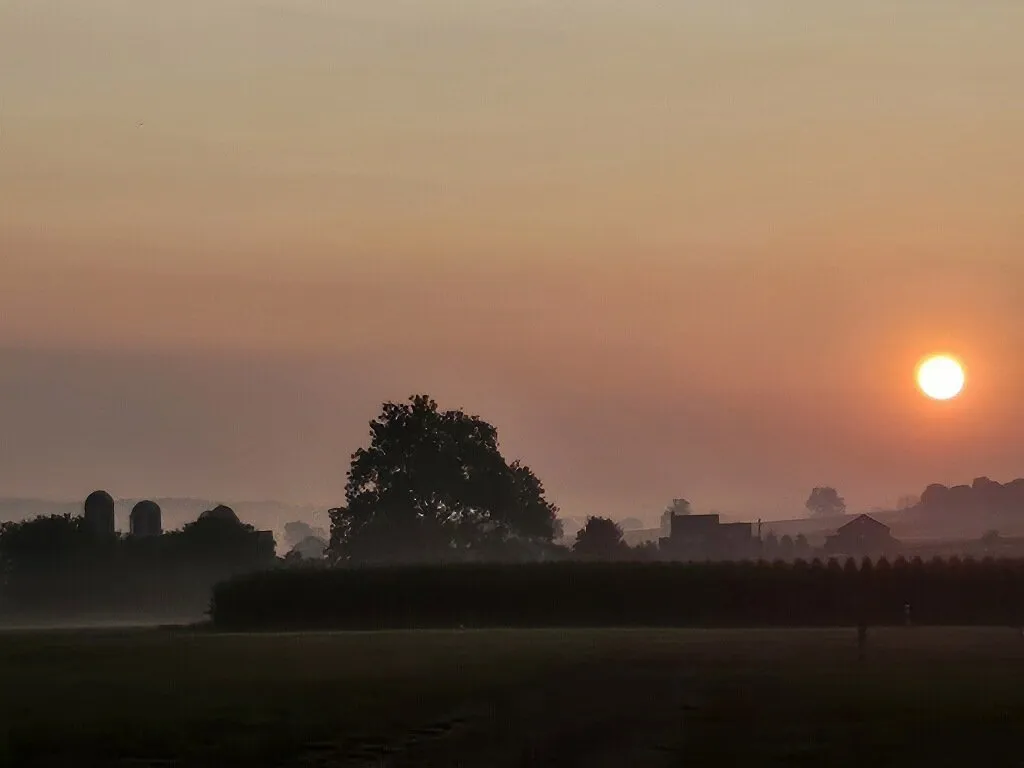 Photo: Intercourse, Pennsylvania, via images.squarespace-cdn.com
The residents sobered up and realized what they'd done, but it was too late. The federal bureaucracy had already processed their request, printed their name on official maps, and assigned them a postal designation. Changing it would require another round of paperwork, more meetings, and frankly, more effort than anyone wanted to invest. So Intercourse, Pennsylvania stayed Intercourse, Pennsylvania—forever.
This wasn't an isolated incident. Across 19th-century America, similar scenes played out in hundreds of communities as the country rushed to formalize the informal geography of westward expansion.
The Great American Naming Chaos
Mapping an entire continent was an impossibly massive undertaking, and the federal government largely left the details to local communities. The result was a patchwork of place names that reflected the personalities, humor, and occasional poor judgment of frontier Americans.
Consider Boring, Oregon, named not for its excitement level but for William H. Boring, an early resident whose surname became permanently attached to his community. Or Hell, Michigan, which got its name when early settlers declared the swampy, mosquito-infested area "a hell of a place to live." The name stuck, and now the town embraces its infernal brand with souvenir shops selling "Hell, Michigan" merchandise to tourists.
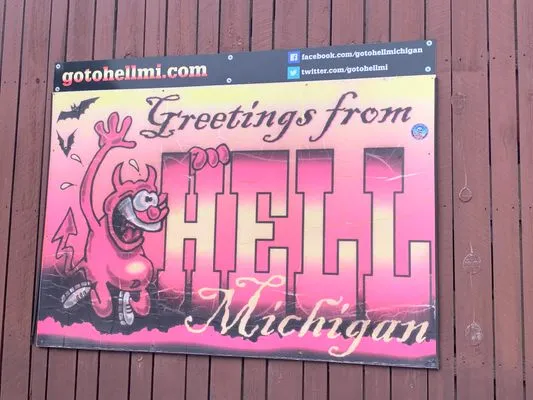 Photo: Hell, Michigan, via img.atlasobscura.com
French Lick, Indiana sounds vaguely inappropriate until you learn it was named for French traders who discovered natural salt licks in the area. Chicken, Alaska earned its name because early residents couldn't agree on how to spell "ptarmigan"—the local game bird—so they settled on the simpler alternative.
These weren't carefully considered decisions by naming committees. They were the result of practical people trying to solve immediate problems without much thought for how their choices would look on official letterhead a century later.
When Clerical Errors Became Permanent
Some of America's strangest town names resulted from simple bureaucratic mistakes that nobody bothered to correct. Peculiar, Missouri got its name when the post office rejected the residents' first choice—"Excelsior"—because another Missouri town was already using it. The postal clerk suggested they pick something "peculiar," and the residents took the suggestion literally.
Cut and Shoot, Texas has a name that sounds like a Western movie, but it actually originated from a dispute over where to build a community stagecoach stop. The argument grew so heated that someone threatened to "cut around the corner and shoot through the bushes" to settle the matter. When they needed to file paperwork with the state, someone remembered the phrase and thought it captured the community's spirit.
Toad Suck, Arkansas earned its name from early river travelers who would stop at a local tavern and "suck on a bottle until they swelled up like toads." When the railroad came through and needed an official station name, the local railroad agent simply used what everyone already called the place.
The Speed of Expansion vs. The Permanence of Names
The fundamental problem was timing. America was expanding westward faster than any formal naming system could handle. Communities would spring up around a mill, a railroad stop, or a mining claim, and residents needed some way to distinguish their settlement from the dozens of others popping up nearby.
Often, they'd use whatever name felt natural in the moment—the local geography, a prominent resident, or an inside joke that made sense to the people who lived there. But once those names got filed with postal authorities, printed on railroad maps, or recorded in county records, they became incredibly difficult to change.
The result is a American landscape dotted with place names that sound like they were chosen by people who never expected anyone outside their immediate community to hear them. Towns like Monkey's Eyebrow, Kentucky; Dildo, Newfoundland (technically Canada, but the same principle applies); and Worms, Nebraska carry names that their founders probably never intended to become permanent fixtures on official maps.
The Human Side of Geography
What these absurd town names reveal is how fundamentally human and informal the process of mapping America actually was. Unlike European countries, where place names evolved over centuries and carried deep historical significance, American geography was being created in real time by ordinary people making practical decisions.
Many towns tried to choose dignified, classical names—hence the dozens of American cities named Athens, Rome, or Troy. But just as many ended up with names that reflected the personalities, humor, and sometimes questionable judgment of frontier communities.
Big Bone Lick, Kentucky was named for the large animal bones found near natural salt deposits. Intercourse, Pennsylvania might have been named for a major crossroads where people "intercourse" or interact. Hell, Michigan embraced its harsh climate and difficult living conditions. These names tell stories about the people who chose them and the communities they were trying to describe.
The Persistence of Place Names
Once established, place names develop a kind of institutional inertia that makes them almost impossible to change. Road signs, postal addresses, business licenses, property deeds, and countless other documents all reference the official name. Changing a town's name requires updating hundreds of databases, reprinting thousands of forms, and coordinating with dozens of government agencies.
Some communities have tried. Hell, Michigan has occasionally considered a name change, but residents always decide the novelty value outweighs the embarrassment. Intercourse, Pennsylvania has embraced its unusual name as a tourist attraction, selling t-shirts and postcards to visitors who find the name amusing.
Other towns have simply learned to live with their founders' choices. The residents of Boring, Oregon have developed a sense of humor about their name, even establishing a sister city relationship with Dull, Scotland. French Lick, Indiana has become famous as the hometown of basketball legend Larry Bird, which helps distract from any snickering about the name.
The Geography of American Character
These ridiculous town names serve as a kind of accidental archaeology of American character. They reveal a country that was being built by practical people who didn't take themselves too seriously, who were more concerned with solving immediate problems than with how their decisions would look to future generations.
The fact that these names have persisted for over a century suggests something important about American culture. Rather than being embarrassed by our ancestors' questionable naming choices, we've largely embraced them as part of our national character. These towns have become tourist destinations, sources of local pride, and reminders that even the most official-seeming aspects of geography started with very human, very fallible decisions.
In the end, America's silliest town names tell a story about how an entire continent was mapped not by grand design, but by thousands of small, local decisions made by ordinary people who were just trying to get their mail delivered. The results may be embarrassing, but they're also authentically American—practical, informal, and ultimately more interesting than any committee-approved alternative could have been.