Five Cents Every Thirty Minutes: The Little Metal Box That Taught America to Resent Its Own Cities
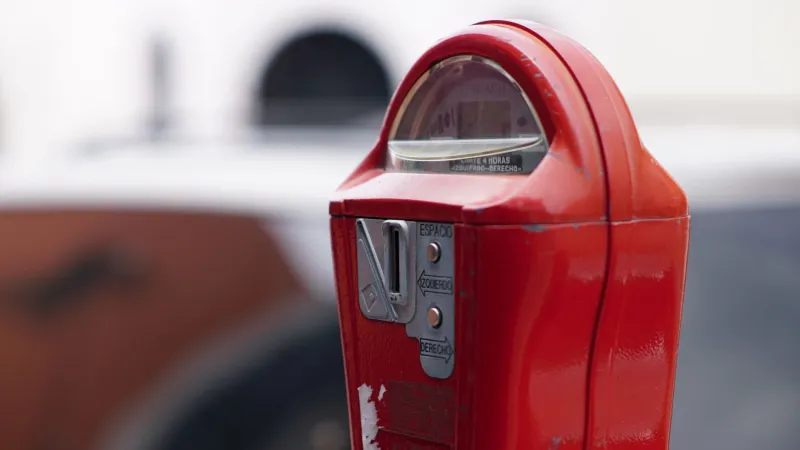
It's such a small thing. A metal post. A coin slot. A dial ticking toward zero. The parking meter seems like it should be a footnote — a minor administrative detail in the larger story of American city life. But trace it back to where it started, and follow the chain of consequences forward, and you begin to see that this unremarkable device did something remarkable: it turned public space into a transaction, and in doing so, quietly rewired how Americans feel about being in cities at all.
Oklahoma City, 1935
Carl Magee was a newspaper editor and attorney with a talent for noticing problems. In the early 1930s, downtown Oklahoma City had a parking problem — specifically, the problem that the same cars were sitting in the same spots all day. Office workers and shop employees would park on the main commercial streets in the morning and leave their cars there until evening, blocking access for the customers those businesses needed to survive.
Magee was appointed to the city's traffic committee and began looking for a mechanical solution. Working with engineers at Oklahoma State University, he designed a device that would meter time against money: pay a nickel, get thirty minutes. When the time expired, an indicator would show the meter had run out, and a police officer could issue a citation.
The Park-O-Meter No. 1 was installed on the corner of First Street and Robinson Avenue in Oklahoma City on July 16, 1935. Within a year, the city had 150 of them. Within a decade, they were in cities across the country.
A Solution Looking for More Problems
Magee's original intention was modest and practical: redistribute parking access, keep downtown commerce alive, prevent all-day squatting on prime curb space. In that narrow sense, it worked. Turnover increased. Customers could find spots. Merchants were satisfied.
But cities quickly discovered something else: parking meters made money. A lot of it. By the late 1930s, municipalities were installing meters not just where turnover was a genuine problem, but wherever they could justify the revenue. The device that had been designed as a traffic management tool became a municipal income stream.
That shift had consequences. Once a city was financially dependent on parking revenue, it had a structural incentive to make driving — and parking — central to urban life. More cars meant more meters. More meters meant more revenue. More revenue meant more roads, more parking infrastructure, more accommodation for vehicles. The feedback loop was self-reinforcing, and it ran for decades.
The Car Became the City's Best Customer
American urban planning in the postwar era is often described as car-centric, and the reasons usually cited are highways, suburbs, and the influence of the auto industry. All of that is real. But the parking meter played a quieter supporting role that doesn't get enough attention.
When cities organized their finances around parking revenue, they also organized their physical space around parking supply. Downtown blocks that might have held buildings were cleared for surface lots. Zoning codes began requiring minimum numbers of parking spaces for new construction — a requirement that still shapes American cities today, mandating vast acreages of asphalt in places where pedestrians are an afterthought.
The message embedded in all of this infrastructure was consistent: this place is designed for people who drove here. If you didn't drive, you were accommodated at best, tolerated at worst. The pedestrian experience of American downtowns — the sense that you're navigating a place optimized for something other than walking — is partly the accumulated result of a century of decisions that started with a coin slot in Oklahoma.
The Anxiety That Comes Free With Every Spot
There's a particular stress that anyone who's parked in an American city knows well. You find a spot, you feed the meter, and then time starts running. You're in a restaurant and you check your watch not because you have somewhere to be, but because the meter does. You cut a conversation short. You rush through a museum. You feel a low background pressure that has nothing to do with the thing you came to do and everything to do with the clock on a post outside.
This is new in human history. For most of urban history, a street was a commons — a shared public space where you could exist without a transaction. The parking meter converted curbside public space into a rentable commodity with an expiration date. And unlike most commercial transactions, you don't get to decide whether you're done when the time runs out. The city decides.
Researchers who study urban stress have noted that the cognitive load of managing parking — finding it, paying for it, monitoring it, worrying about it — is one of the more reliable sources of low-level anxiety in American daily life. It's not dramatic. It rarely rises to the level of a genuine crisis. It just hums along in the background, a small persistent tax on the experience of being somewhere.
The Meter's Modern Descendants
The original Park-O-Meter is long gone, replaced first by electronic meters and then by pay stations that accept credit cards and send text alerts when time is running out. Some cities have moved to dynamic pricing, where the cost of a parking spot fluctuates based on demand — cheaper on quiet blocks, expensive near popular destinations. The technology has gotten sophisticated. The underlying logic hasn't changed.
What has changed is the pushback. Cities like San Francisco, Seattle, and Washington D.C. have spent the past decade rethinking their parking minimums, removing some mandatory requirements, and experimenting with converting parking lanes into bike lanes, parklets, and outdoor dining. The pandemic accelerated some of this, as empty streets prompted cities to ask what they actually wanted those streets to be for.
It's a slow renegotiation of something Carl Magee never intended to settle in the first place. He just wanted to stop the same cars from sitting on First Street all day.
Eighty-nine years later, we're still arguing about what public space is actually for — and every parking meter in every American city is a small monument to the moment we first decided it should cost something to stand still.