The Small Square of Paper That Speakeasies Made Necessary
Sit down at almost any bar in America and within thirty seconds, something gets placed in front of you that you will immediately ignore: a cocktail napkin. Small, usually white, occasionally printed with the bar's logo, almost always slightly damp by the time you notice it. You probably don't think about it. Nobody does. That's exactly the point — it feels like it was always there, like bars came with cocktail napkins the way kitchens come with sinks.
They didn't. And the reason cocktail napkins became a fixture of American drinking culture is weirder and more specific than you'd ever guess.
Bars Before the Napkin
In the years before Prohibition, American saloons were not particularly concerned with elegance. The classic pre-Prohibition bar was a functional place: a long counter, a brass rail, bottles lined up behind a mirror, and a bartender who kept things moving. Drinks arrived in heavy glassware, sometimes with a cloth rag wiped across the counter first if the barkeep was feeling generous. Paper napkins existed — they'd been around since the late nineteenth century — but they were primarily a dining room product, associated with restaurants and domestic entertaining rather than drinking establishments.
The idea of a small, purpose-built square of paper specifically designed to sit under a cocktail glass was a novelty in the 1910s. A few upscale hotels and clubs used them as a kind of luxury affectation, the paper equivalent of a pressed linen coaster. For ordinary bars, they were unnecessary overhead. Glass went on counter. Counter got wiped. Repeat.
Then, in January 1920, the Eighteenth Amendment took effect, and the entire American drinking infrastructure went underground.
What Prohibition Actually Did to Bars
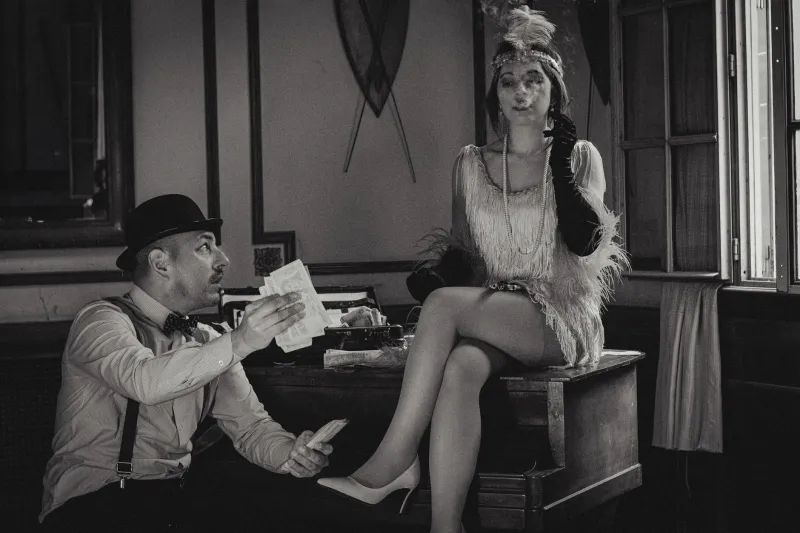
Prohibition didn't stop Americans from drinking. Anyone who has spent five minutes with American history knows this. What it did was transform drinking from a public, legal, relatively transparent activity into a covert one conducted in basements, back rooms, and unmarked doorways. The speakeasy was born — and with it came a whole new set of operational problems that legitimate saloons had never faced.
The most pressing problem was evidence. A functioning speakeasy was, by definition, a crime scene. Bottles of illegal liquor had to be hidden or disguised. Glasses had to be cleared quickly. If police came through the door — which they did, sometimes for enforcement, sometimes for their weekly bribe pickup — the establishment needed to be able to look, at a moment's notice, like something other than what it was. Some speakeasies operated as ostensible coffee shops or soda fountains. Others had elaborate concealment systems. All of them were in the business of making illegal drinking look like nothing in particular.
This is where the cocktail napkin found its moment.
The Evidence Problem and the Paper Solution
A glass sitting on a bar counter is obvious. A glass sitting on a folded piece of paper is slightly less obvious — and more importantly, a glass that gets cleared quickly, with the napkin wrapped around it, leaves less residue, less ring, less visible evidence that anything was there at all. Speakeasy bartenders began using paper napkins not as a hospitality gesture but as a practical tool for rapid cleanup. Wrap the glass, clear the surface, look clean.
Beyond the evidence angle, paper napkins solved another speakeasy-specific problem: hygiene theater. Legitimate bars had always used cloth rags to wipe down surfaces, but cloth rags in an illegal operation were a liability — soaked with alcohol, they were evidence in fabric form. Paper napkins could be disposed of instantly. They were single-use by design. They left nothing behind.
The speakeasy also, paradoxically, elevated the social experience of drinking. Because illegal bars had to justify their existence and their prices, many of them leaned into a kind of theatrical sophistication that pre-Prohibition saloons hadn't bothered with. Cocktails became more elaborate — partly to mask the taste of badly made bootleg liquor, partly to create an atmosphere of glamour. And glamour, it turned out, required props. The cocktail napkin, placed neatly under a carefully constructed drink, looked like it belonged there.
After Repeal, the Napkin Stayed
When Prohibition ended in 1933, the speakeasies closed and legitimate bars reopened. But the habits formed during thirteen years of underground drinking didn't evaporate. Bartenders who had trained during Prohibition — and there were a lot of them — brought their practices with them into legal establishments. The cocktail napkin came along for the ride.
Paper goods manufacturers, who had watched demand for small disposable napkins grow steadily through the 1920s, had already begun producing them in volume. Companies that had previously focused on dinner napkins and tissue paper added cocktail napkins to their lines. By the late 1930s, the product had a settled place in bar supply catalogs, marketed as both a practical surface protector and a branding opportunity — print your logo on it, make it part of the atmosphere.
The postwar boom in American hospitality — the explosion of restaurants, hotel bars, country clubs, and suburban entertaining — turned the cocktail napkin into a genuine staple. Hostesses stocked them for parties. Airlines used them on drink service. The object that had started as a speakeasy cleanup tool became a marker of civilized social drinking.
The Napkin Under Your Glass
Next time a bartender sets a drink in front of you, take a second to look at what's underneath it. That small square of paper has a stranger history than it deserves. It was refined in illegal back rooms by bartenders trying to hide what they were doing from the police. It survived the end of Prohibition because the habits of thirteen years of covert drinking had already made it indispensable.
It's a souvenir of American lawbreaking, sitting quietly under your glass.