Eggs, Bacon, and the Bodybuilders Who Made Them Mandatory: The Strange Engineering of the American Breakfast

Ask most Americans what they eat for breakfast and the answers cluster around a recognizable set: eggs, bacon, toast, maybe cereal, maybe a glass of orange juice. The combination feels timeless, almost biological — as if the human body specifically requires these things before noon. It doesn't, of course. And the story of how this particular meal became the American default is less about nutrition and more about a surprisingly effective campaign of cultural persuasion that unfolded over about fifty years.
The engineers of your morning routine include a Presbyterian minister obsessed with digestion, a group of Seventh-day Adventists in Michigan, a handful of circus strongmen, and a public relations man who convinced a nation of bacon skeptics to eat more pork. None of them were working together. The result they produced looks, in hindsight, almost planned.
What Americans Actually Ate Before the Rules Were Set
In the early 19th century, American breakfast habits were genuinely all over the place. Rural families ate whatever was available and calorie-dense — salt pork, cornbread, potatoes, beans. In cities, working-class households often started the day with leftovers from the previous night's dinner. Alcohol at breakfast was common enough that it barely registered as unusual; hard cider and whiskey were considered reasonable morning beverages by a significant portion of the population.
Wealthy households ate elaborate morning spreads with multiple courses, but that was performance as much as nutrition. There was no national consensus about what breakfast was supposed to be, how much of it you were supposed to eat, or even whether it was strictly necessary.
The Reverend Who Declared War on Your Stomach
The first major disruption to this chaos came from an unlikely source: Sylvester Graham, a Presbyterian minister from Connecticut who became, in the 1830s and 1840s, one of the most influential dietary reformers in American history. Graham was convinced that most human illness — physical and moral — could be traced to improper eating, particularly the consumption of meat and refined foods. He preached vegetarianism, whole grains, and digestive virtue with evangelical intensity.
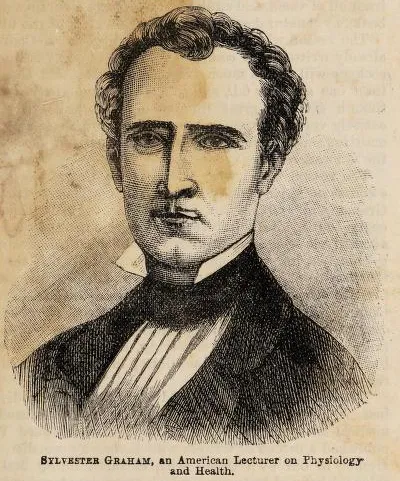 Photo: Sylvester Graham, via lazonaveggie.com
Graham crackers, still sold in every American grocery store, are named for him — though the version he invented was considerably less sweet and considerably more committed to digestive reform than the honey-flavored rectangle you use for s'mores today. Graham's influence was enormous in its moment, and it planted a seed: the idea that breakfast was a moral and health statement, not just a meal.
His ideological descendants took that idea and ran with it in Battle Creek, Michigan, where a community of Seventh-day Adventists had established a sanitarium under the direction of Dr. John Harvey Kellogg. Kellogg shared Graham's suspicion of meat and his enthusiasm for digestive wellness. He was also a relentless experimenter, and in the 1890s he and his brother Will Keith accidentally discovered that cooked wheat, when left out and then processed through rollers, produced a light, flaky product that patients seemed to enjoy. Breakfast cereal was born — not as a commercial product initially, but as a health intervention.
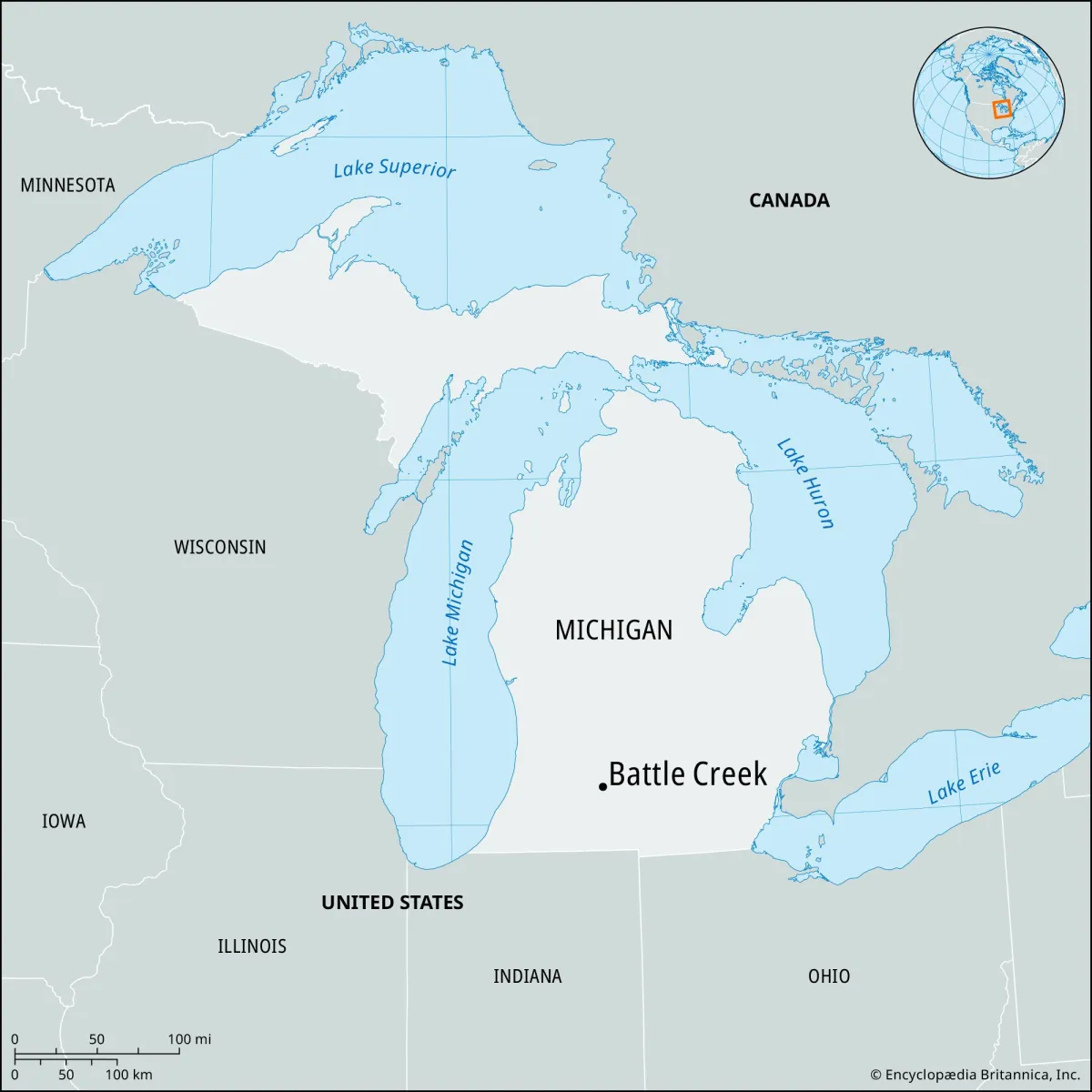 Photo: Battle Creek, Michigan, via cdn.britannica.com
Will Keith eventually broke with his brother and commercialized the concept, founding the Kellogg Company and beginning the marketing of corn flakes to a national audience. The pitch was health, lightness, and digestive ease. Americans, already primed by decades of Graham-influenced health discourse, were receptive.
The Strongmen Who Made Protein Respectable
While the cereal companies were building their market, a different cultural force was pushing in a somewhat different direction: the physical culture movement. In the late 19th and early 20th centuries, strongmen and bodybuilders were genuine celebrities. Figures like Eugen Sandow, who toured America in the 1890s and drew enormous crowds, represented a new ideal of the disciplined, engineered body. They wrote books, gave lectures, and sold training programs.
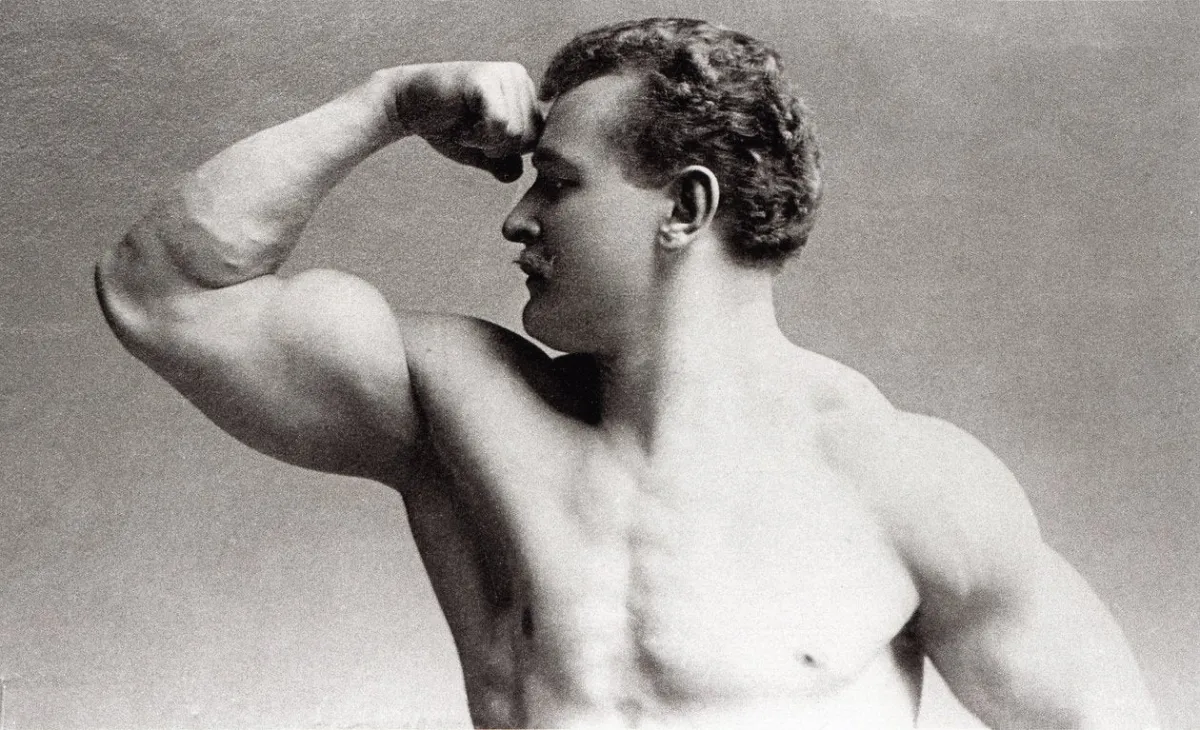 Photo: Eugen Sandow, via teamanrstore.com
And they talked constantly about what they ate.
The physical culture movement's dietary gospel centered on protein — eggs especially, but also meat. The idea that a strong body required substantial protein at every meal, including breakfast, filtered into popular consciousness through these figures with remarkable speed. Sandow and his contemporaries weren't just athletes; they were cultural authorities on the body, and when they said eggs were essential, people listened.
This created an interesting tension in American breakfast culture: the cereal reformers were pushing light, grain-based mornings, while the physical culture crowd was pushing protein-heavy starts. Both were selling their vision aggressively. The result was that Americans became unusually focused on breakfast as a category — more focused than most other cultures — even as they debated what it should contain.
The Bacon Campaign That Closed the Deal
The final piece of the puzzle arrived in the 1920s, courtesy of a public relations pioneer named Edward Bernays. Hired by the Beech-Nut Packing Company to increase bacon sales, Bernays did something clever: rather than advertise bacon directly, he commissioned a survey of physicians asking whether a hearty breakfast was healthier than a light one. The overwhelming majority said yes — a not-very-surprising finding. Bernays then publicized the survey results alongside the suggestion that a hearty breakfast might include bacon and eggs.
It was, by modern standards, a fairly transparent maneuver. By 1920s standards, it was genius. The combination of apparent medical authority and a product recommendation embedded within it helped cement bacon and eggs as the image of the proper American morning meal in a way that pure advertising might not have.
The Meal That Stuck
By the 1930s and 1940s, the American breakfast had largely settled into the form we still recognize: eggs, bacon or sausage, toast, juice, coffee. Cereal had carved out its own significant share. The pattern was reinforced by diners, by school cafeteria programs, by the rhythms of industrial work schedules that demanded an early, substantial meal.
None of it was inevitable. The specific combination of foods that Americans treat as morning defaults was assembled, piece by piece, by reformers with digestive obsessions, strongmen with protein philosophies, cereal entrepreneurs with commercial ambitions, and a PR man who understood that a doctor's quote was worth more than a full-page ad.
Your breakfast, in other words, has a backstory. It always does.