The Cheese That Was Never Supposed to Be Delicious — And Won Anyway
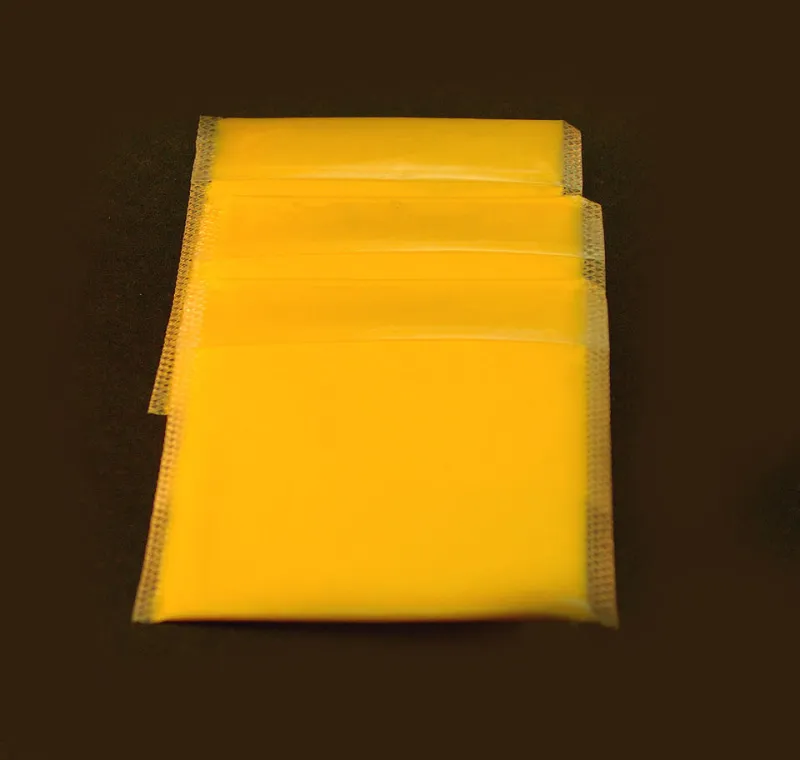
Photo: Steve Spring, aka Lazarus-long at en.wikipedia, Attribution, via Wikimedia Commons
Peel back the plastic wrapper on a slice of American cheese and you are holding something that has been specifically engineered not to do what cheese naturally does. It won't crumble. It won't sweat. It won't grow mold. Left in a sealed wrapper, it will outlast most things in your kitchen by a considerable margin. This is not an accident. It is, in fact, the entire point.
American processed cheese — the kind that comes in individual cellophane squares and melts into a smooth, even layer on a burger patty — was not invented by someone trying to make great cheese. It was invented by someone trying to solve a military logistics problem. That it ended up becoming one of the most culturally embedded foods in the United States is a story about wartime necessity, government contracts, and the remarkable human capacity to normalize almost anything if it's introduced early enough.
James Kraft and the Cheese That Wouldn't Die
James Lewis Kraft was a Canadian-born businessman who moved to Chicago in 1903 with sixty-five dollars and a horse named Paddy. He started buying cheese wholesale and reselling it to local grocers, eventually building a distribution business that would become one of the largest food companies in American history.
In the early 1900s, cheese was a perishable, unpredictable product. Wheels of natural cheese aged unevenly, developed rinds of varying thickness, and could go bad in transit with frustrating regularity. Kraft was less interested in the romance of traditional cheesemaking than in solving the practical problem of shelf life. He began experimenting with heating natural cheese and blending it with emulsifying salts — sodium phosphate, primarily — to create a product that was stable, consistent, and capable of surviving conditions that would destroy conventional cheese.
In 1916, he filed a patent for his process. The resulting product was a smooth, uniform paste that could be poured into tins and sealed. It wasn't exactly cheese in the traditional sense. It was something new — a cheese-derived product that behaved in ways cheese had never behaved before.
Initially, the market response was underwhelming. Grocers weren't sure what to do with it. Consumers found it unfamiliar. The product existed but hadn't found its purpose.
The War That Changed Everything
Then the United States entered World War I, and the U.S. Army had a problem. Feeding troops overseas required food that could survive weeks at sea in variable temperatures, arrive edible, and provide adequate nutrition. Natural cheese failed that test regularly. Kraft's processed product passed it.
The government placed an order for approximately six million pounds of Kraft's tinned processed cheese for military use. Overnight, a product that had struggled to find civilian buyers became a patriotic necessity. Soldiers ate it in the trenches. Supply officers praised its stability. The U.S. Army had, in effect, given Kraft's invention its first mass market.
When those soldiers came home, they brought their familiarity with processed cheese with them. A generation of American men had eaten it under difficult circumstances and associated it with sustenance, reliability, and — in a strange way — survival. That wasn't a bad brand position to come home to.
Engineering the Perfect Slice
The transition from tinned paste to the individually wrapped square that Americans know today took several more decades of refinement. Kraft continued developing his process through the 1920s and 1930s, introducing Velveeta in 1928 and eventually moving toward the foil-wrapped slices that became standard in the postwar years.
The individual slice format was a masterpiece of mid-century convenience culture. It required no cutting, no crumbling, no judgment about how much was the right amount. Each slice was identical to every other slice. It melted evenly and completely. It was, in every measurable way, the anti-cheese — a product that had eliminated all of cheese's inconveniences while retaining its general flavor profile and its ability to make things taste richer.
Food scientists would later note that the emulsification process Kraft pioneered actually does something interesting to meltability. Natural cheese, when heated, tends to separate — the fat breaks away from the protein structure and you get a greasy, grainy result. Processed cheese melts smoothly and evenly because the emulsifying salts prevent that separation. For a burger, that's not a trivial advantage. It's actually the reason a fast-food cheeseburger looks the way it does.
When the Imitation Became the Original
By the 1950s and 1960s, processed cheese slices were so thoroughly embedded in American domestic life that they had effectively redefined what cheese meant to a large portion of the population. Children grew up eating it. School cafeterias served it. The diner cheeseburger — one of America's most iconic foods — was built around it.
The cultural displacement was so complete that when the gourmet food movement of the 1980s and 1990s began pushing natural cheeses back onto American tables, there was genuine resistance. Cheddar on a burger felt wrong to people who had grown up with the smooth, even melt of the processed slice. Real cheese, in this context, was the unfamiliar option.
Food writers have spent considerable energy in recent years rehabilitating the processed slice — arguing, not entirely without merit, that its melt characteristics make it technically superior for certain applications. This is probably not the argument James Kraft imagined making when he was heating cheese in a Chicago lab in 1915. But it reflects how thoroughly his military-logistics solution rewrote American expectations about what cheese is supposed to do.
The Wrapper as Cultural Artifact
There is something revealing about the fact that American processed cheese comes individually wrapped. The packaging is a promise: this slice is identical to every other slice. There will be no surprises. The wrapper is a guarantee of consistency in a way that a wheel of aged cheddar simply cannot offer.
Kraft solved a wartime spoilage problem. What he accidentally created was a food product perfectly calibrated for a culture that was increasingly organizing itself around convenience, standardization, and the elimination of uncertainty. The cheese didn't change America's food culture. It arrived just as America's food culture was changing — and fit perfectly into the space that was opening up.