The Space Station Experiment That Put Smoke Detectors in Every American Home
The Problem Nobody Saw Coming
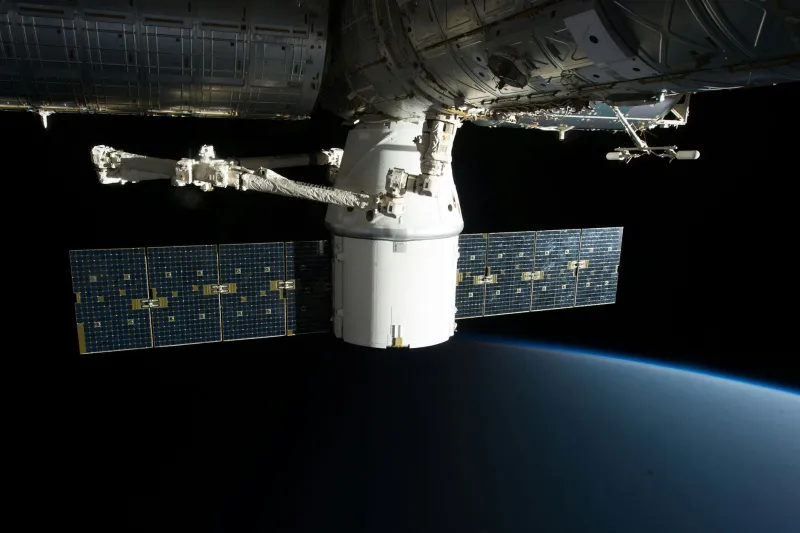
In 1973, NASA engineers working on the Skylab space station faced a potentially deadly challenge: how to detect toxic gases in a confined environment where opening a window wasn't an option. Their solution would accidentally revolutionize home safety for millions of Americans, though it took years for anyone to figure out how to use it properly.
The space program had already developed sophisticated fire suppression systems, but detecting invisible gases required entirely different technology. NASA needed something sensitive enough to identify trace particles, compact enough to fit in a spacecraft, and reliable enough to function for months without maintenance.
What they created was far more sensitive than anything they'd originally intended—and far more commercially viable than anyone realized.
The Accidental Discovery
Dr. Francis Robbins and his team at NASA's Lewis Research Center were experimenting with ionization chamber technology when they stumbled onto something unexpected. While testing their gas detection system, they noticed that the device was picking up microscopic smoke particles with remarkable accuracy, even at concentrations far below what human senses could detect.
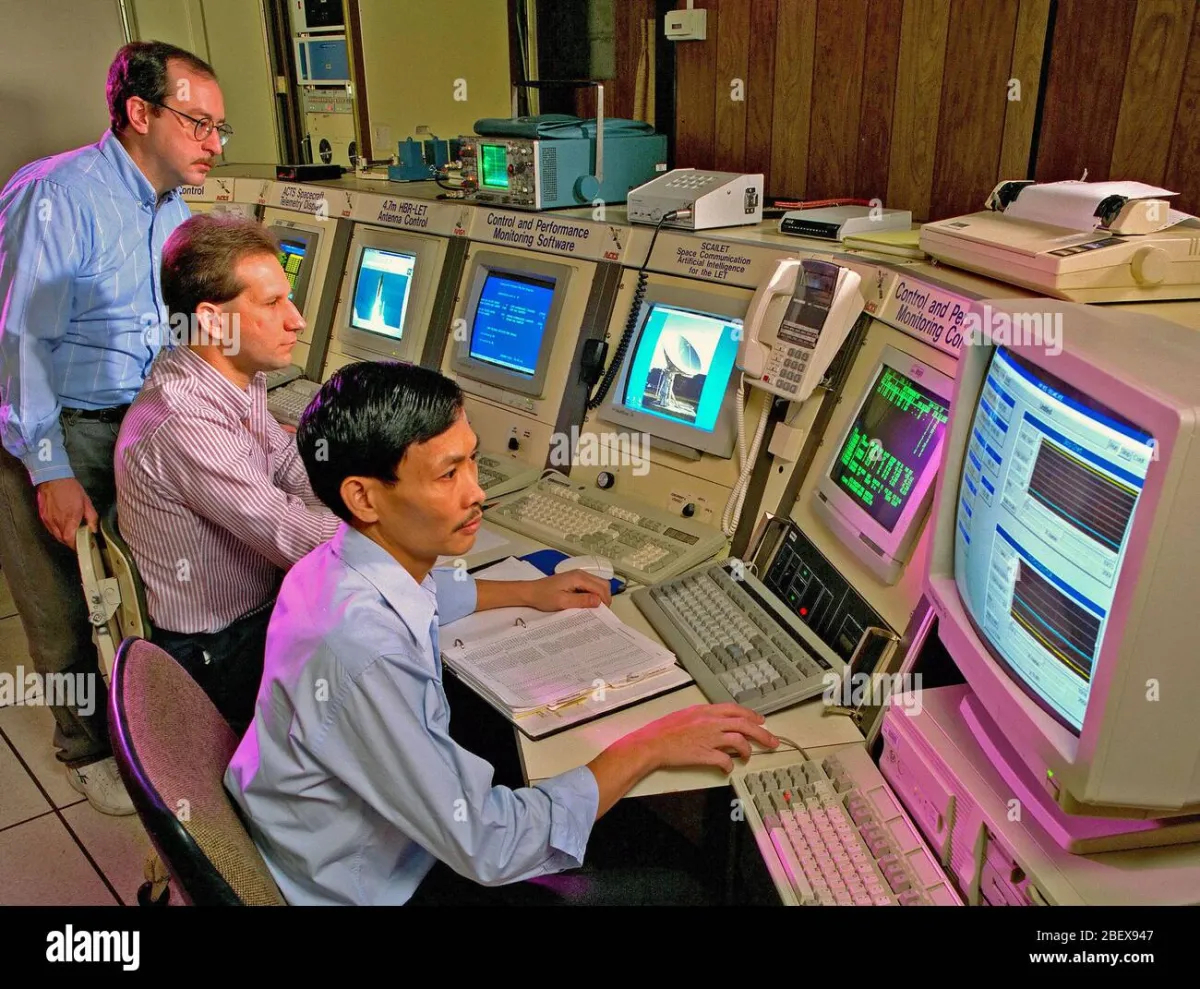 Photo: NASA's Lewis Research Center, via c8.alamy.com
This wasn't what they were trying to accomplish. The NASA team was focused on detecting specific toxic compounds that could build up in spacecraft atmospheres. But their ionization chamber was so sensitive that it responded to any airborne particles, including the barely visible smoke from a cigarette lit three rooms away.
Robbins realized they'd accidentally solved a different problem entirely. Home fire detection in the early 1970s relied on heat-sensitive devices that only activated after fires were already well-established. A system that could detect smoke particles before flames became visible could save thousands of lives—and it would be far cheaper to manufacture than the complex gas analysis equipment NASA actually needed.
From Space Station to Suburban Kitchen
The transition from space technology to consumer product happened with unusual speed, driven by a combination of government pressure and private sector opportunism. In 1974, the National Fire Protection Association began pushing for mandatory smoke detection in new residential construction, creating an instant market for any company that could produce reliable devices at scale.
NASA licensed their ionization technology to several private manufacturers, but the early results were mixed. The space-grade electronics that worked perfectly in controlled laboratory conditions proved finicky when installed in real homes by contractors who didn't understand the underlying physics.
The biggest challenge was placement. NASA's original system was designed for the controlled environment of a spacecraft, where air circulation patterns were predictable and the device could be positioned for optimal sensitivity. American homes, with their varied layouts, temperature fluctuations, and cooking activities, created conditions that nobody had tested.
The Installation Guesswork
Here's where the story gets embarrassing for everyone involved: the placement guidelines that came with early smoke detectors were essentially educated guesses. NASA's engineers knew their technology could detect smoke particles, but they had no data about where those particles would travel in typical residential buildings.
The original installation instructions recommended mounting detectors "on ceilings in central locations," but this advice was based on general principles rather than specific research. Nobody had systematically studied how smoke moved through ranch houses, split-levels, or apartment buildings.
As a result, millions of Americans installed their new smoke detectors in locations that ranged from reasonably effective to completely useless. Some were placed too close to kitchens and went off every time someone burned toast. Others were installed in hallways where they might not detect fires in distant bedrooms until it was too late.
The Beeping Revolution
The most controversial aspect of early smoke detectors wasn't their sensitivity—it was their volume. NASA's original design used visual indicators and silent alarms that would alert mission control computers. But home versions needed to wake sleeping families, which meant incorporating ear-piercing audio alarms that could penetrate closed doors and compete with air conditioning noise.
The result was a device that many homeowners actively resented. Early smoke detectors were notorious for false alarms triggered by cooking smoke, shower steam, or even dust particles stirred up by heating systems. The cure often seemed worse than the disease, leading to widespread "accidental" disconnection of smoke detector batteries.
Fire safety officials found themselves in the awkward position of promoting a technology that annoyed the people it was supposed to protect. Public service campaigns focused heavily on the importance of maintaining smoke detector batteries, but they couldn't address the fundamental problem: many detectors were installed in locations where false alarms were inevitable.
The Learning Curve
It took nearly a decade of real-world experience before manufacturers and safety experts figured out optimal placement strategies for residential smoke detectors. The breakthrough came from studying actual house fires and mapping how smoke traveled through different types of buildings.
Researchers discovered that the "central ceiling location" advice was wrong for most homes. Smoke patterns varied dramatically based on floor plans, ventilation systems, and even furniture placement. The most effective installations required multiple detectors positioned according to specific airflow patterns rather than general rules.
This knowledge came too late for the millions of Americans who had already installed their detectors according to the original guesswork guidelines. Many homes had smoke detectors that provided minimal protection while maximizing annoyance—a combination that undermined public confidence in the entire technology.
The Irony of Success
Today, smoke detectors prevent an estimated 1,100 deaths and 4,500 injuries annually in the United States. The technology that began as a NASA space experiment has become one of the most successful safety innovations in American history. But the most common reason smoke detectors fail today is the same issue that made them controversial when they were first introduced: people disconnect them to stop false alarms.
The Consumer Product Safety Commission estimates that 23% of smoke detector failures result from missing or disconnected batteries, usually removed after nuisance alarms. Despite decades of public education, many Americans still struggle with the balance between fire safety and daily convenience.
Modern smoke detectors incorporate sophisticated algorithms designed to distinguish between real fires and cooking smoke, but they're still working with the same basic ionization technology that NASA developed for spacecraft. The fundamental challenge remains unchanged: creating a device sensitive enough to provide early warning but smart enough to avoid crying wolf.
The Accidental Legacy
The smoke detector represents one of the most successful examples of accidental technology transfer in American history. NASA's solution to a space-specific problem became a ubiquitous household device that most people never think about—until it starts beeping at 3 AM because the battery is dying.
The story reveals how quickly experimental technology can become essential infrastructure, often before anyone fully understands how to implement it effectively. NASA's engineers created a remarkable detection system, but it took years of trial and error in millions of American homes before anyone figured out how to use it properly.
Every time a smoke detector saves a life, it's validating an experiment that began in a NASA laboratory forty years ago. And every time someone yanks out the battery after a false alarm, they're experiencing the same frustration that has defined this technology since the day it left the space program and entered the real world.