The Orchid That Lost Its Reputation: How the World's Most Exotic Spice Became America's Word for Boring
The Emperor's Sacred Bean
When Spanish conquistador Hernán Cortés first tasted chocolate in the court of Aztec emperor Montezuma II in 1519, he was drinking something that would have been unrecognizable to modern palates. The bitter cacao was mixed with chili peppers, honey, and a mysterious flavoring the Aztecs called tlilxochitl — "black flower."
 Photo: Montezuma II, via ecdn.teacherspayteachers.com
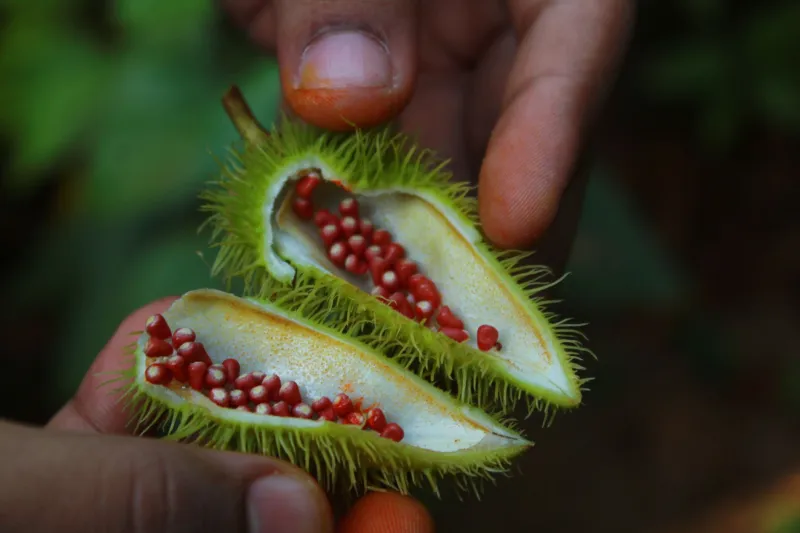
This black flower was vanilla, and to the Aztecs, it was far from ordinary. The pods came from a rare orchid that grew only in the humid forests of what is now Mexico, and they were so precious that they were used as currency. Montezuma reportedly consumed 50 cups of vanilla-spiced chocolate daily, believing it gave him strength and virility.
The Aztecs weren't wrong about vanilla's rarity. The vanilla orchid (Vanilla planifolia) blooms for just one day per year, and in nature, it can only be pollinated by a specific species of Mexican bee. Even today, most vanilla is hand-pollinated by farmers using thin sticks — a technique that wasn't discovered until 1841.
Jefferson's Expensive Obsession
Vanilla arrived in Europe as chocolate's exotic companion, but it took nearly 300 years for anyone to think of using it alone. That someone was Thomas Jefferson, who encountered vanilla ice cream during his time as ambassador to France in the 1780s.
 Photo: Thomas Jefferson, via static.phemex.com
Jefferson became obsessed. He spent a fortune importing vanilla pods to America and served vanilla ice cream at White House dinners, carefully copying down the recipe from his French chef. To Jefferson's guests, vanilla wasn't plain — it was the height of European sophistication, a flavor so rare and expensive that only the president could afford it.
But Jefferson's vanilla ice cream created an unexpected problem. American diners loved the flavor, but vanilla pods cost more than most people earned in a month. The demand was there, but the supply was controlled entirely by Mexico, which had banned the export of vanilla orchid plants to maintain their monopoly.
The Boy Who Broke the Monopoly
Everything changed in 1841 on the French island of Réunion, when a 12-year-old enslaved boy named Edmond Albius figured out how to hand-pollinate vanilla orchids. Using a thin stick and his thumb, Albius could do the work of the Mexican bees, making it possible to grow vanilla anywhere with the right climate.
 Photo: Réunion, via static.gnoss.ws
French colonial islands in the Indian Ocean began producing vanilla, breaking Mexico's 300-year monopoly. Prices dropped dramatically, and for the first time, vanilla became accessible to middle-class American families.
But even as vanilla became more common, it remained complex and labor-intensive. Each pod must be harvested at exactly the right moment, then subjected to months of careful curing — alternating between sweating in the sun and resting in wooden boxes. The process develops vanilla's signature flavor compound, vanillin, along with over 250 other chemical compounds that create its full aroma.
The Laboratory Accident That Changed Everything
In 1874, German chemist Wilhelm Haarmann was trying to extract something completely different from pine bark when he accidentally created synthetic vanillin in his laboratory. This artificial version captured vanilla's primary flavor compound but none of its complexity — it was vanilla's loudest note played alone, without the symphony of supporting flavors.
American food manufacturers embraced synthetic vanillin immediately. It was cheap, consistent, and didn't require importing exotic orchid pods from tropical islands. By 1900, most American vanilla flavoring was artificial, and most Americans had never tasted real vanilla.
The Standardization of Flavor
Here's where vanilla's reputation began to shift. As American food production industrialized in the early 20th century, manufacturers needed reliable, consistent flavors that would taste the same in every product. Synthetic vanillin fit perfectly — it was predictable, economical, and familiar to American palates.
Vanilla became the default flavor for American desserts not because it was boring, but because it was versatile. It paired well with chocolate, fruit, nuts, and spices without competing for attention. Ice cream manufacturers used vanilla as their base flavor, adding other ingredients to create variations.
But this versatility became vanilla's curse. Because it appeared in so many products as a background flavor, Americans began to associate vanilla with "basic" or "standard." The flavor that had once been exotic enough for Aztec emperors was now so common that it seemed unremarkable.
The Metaphor Takes Hold
By the 1960s, "vanilla" had entered American slang as a synonym for plain, ordinary, or conventional. The linguistic shift was complete: the world's second-most expensive spice (after saffron) had become shorthand for boring.
The irony deepened in the 1980s and 90s, when American ice cream shops began offering dozens of exotic flavors — green tea, lavender honey, salted caramel — while vanilla remained the bestseller. Americans called it boring, then chose it more than any other flavor.
The Complex Truth About Simple Vanilla
Today, real vanilla remains one of the most complex flavors in the culinary world. A single vanilla pod contains vanillin, vanillic acid, p-hydroxybenzaldehyde, and hundreds of other compounds that create its full flavor profile. Master chocolatiers and perfumers prize Madagascar vanilla, Tahitian vanilla, and Mexican vanilla for their distinct characteristics, the way wine experts distinguish between regions and vintages.
Meanwhile, most Americans have never tasted real vanilla. The "vanilla" in most commercial products is still synthetic vanillin, often derived from wood pulp or petroleum byproducts. We've spent over a century calling something boring that we've never actually experienced.
The Comeback of Complexity
Recently, artisanal food producers have begun reintroducing Americans to real vanilla, emphasizing its rarity and complexity. High-end restaurants serve desserts featuring single-origin vanilla the way they feature single-malt whiskey. The pods that Montezuma treasured are finally being recognized for what they always were: one of the world's most sophisticated flavors.
The vanilla orchid still blooms for just one day per year, still requires hand-pollination, still needs months of careful curing to develop its full flavor. Nothing about vanilla production has become ordinary — we just convinced ourselves that the result was boring.
In the end, vanilla's reputation says more about American attitudes toward mass production than it does about the spice itself. We took something rare and complex, replicated its most obvious characteristic, then dismissed the original as unremarkable. The black flower that was once currency became a metaphor for the mundane — not because it changed, but because we forgot what made it special in the first place.