The Little Metal Box That Gave America a New Way to Feel Late
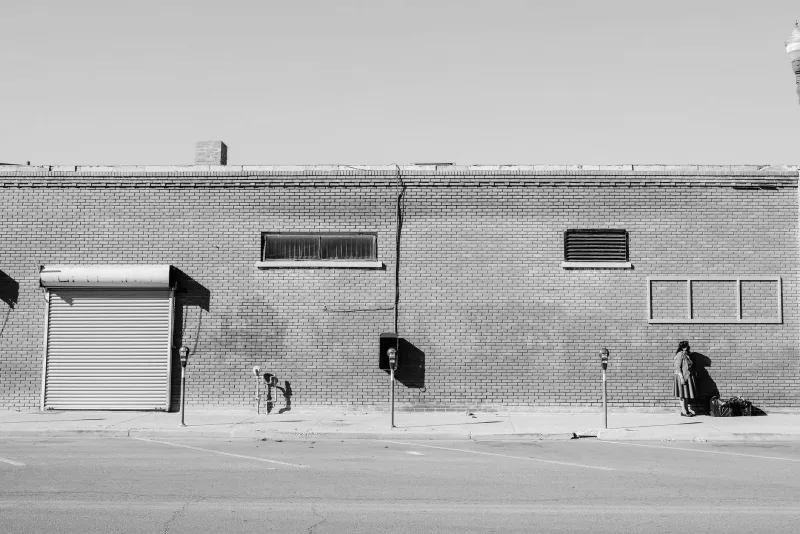
You know the feeling. You've parked the car, fed the meter, and now somewhere in the back of your mind a clock is running. It doesn't matter what you're doing — eating lunch, getting a haircut, standing in a line that's moving too slowly — part of your attention has been quietly hijacked by a metal post on a curb three blocks away. You're calculating. You're estimating. You're almost certainly wrong about how much time you have left.
This particular flavor of low-grade urban anxiety is so familiar that it barely registers as unusual anymore. But it has a specific origin, a specific city, and a specific moment when it was switched on for the first time. And like most things that go on to shape daily American life, it started as a solution to a completely different problem.
Downtown Was Drowning
Oklahoma City in the early 1930s was growing fast and choking on itself. The automobile had arrived in full force, and the commercial streets of downtown — particularly Park Avenue — were gridlocked not because of too much traffic moving through, but because of too many cars sitting still. Local business owners and their employees had figured out a convenient trick: park your car in front of a store in the morning and leave it there all day. Why not? Parking was free, and nobody was stopping them.
The result was that actual customers couldn't find spaces. Shoppers would circle blocks, give up, and take their business elsewhere. Merchants who had initially liked the idea of free street parking were now watching it strangle their foot traffic. The city tried time limits enforced by traffic officers, but the manpower required was impractical and the enforcement was inconsistent.
Carl Magee, a newspaper editor and lawyer who had moved to Oklahoma City and was serving on a committee tasked with solving the downtown congestion problem, arrived at an idea that was simple and ruthless in equal measure: make parking cost money, and make the cost visible and automatic.
The Magee-Meter
Magee worked with engineers at Oklahoma State University to develop a mechanical device that would accept a coin, measure elapsed time, and display — through a small visible window — whether the paid period had expired. The design they arrived at was mounted on a post, operated by a coin slot, and featured a dial that turned as time passed. When the time ran out, a flag or indicator would show. A traffic officer walking the block could see at a glance which cars were over their limit.
On July 16, 1935, Oklahoma City installed 174 of these Park-O-Meters along its downtown streets. The fee was a nickel for an hour. The reaction from the public was immediate and divided. Some residents appreciated the new availability of parking spaces. Others were furious at the idea of paying for something that had been free. One local woman reportedly attacked a meter with her umbrella on the first day of operation, which suggests the emotional temperature around this innovation was running fairly high from the start.
The legal challenges came quickly. Arguments were made that the meters were an illegal tax, a municipal overreach, an unconstitutional burden on commerce. The courts disagreed, and the meter survived. Within a few years, cities across the country were installing their own versions. By the 1940s, the parking meter was a fixture of American urban life.
What the Meter Actually Invented
The practical effects were real and measurable. Parking turnover increased. Downtown businesses reported better foot traffic. The meters generated municipal revenue that funded everything from road maintenance to public services. On a purely logistical level, Magee's device worked exactly as intended.
But the parking meter did something else — something nobody had designed into it and nobody had anticipated. It introduced a new unit of psychological time into everyday American life.
Before the meter, parking was open-ended. You left your car, you did your business, you came back. Time wasn't a financial variable in that equation. After the meter, every parked car had a countdown attached to it. The meter transformed idle time — time spent shopping, eating, waiting — into a resource that was being actively consumed against a paid balance. It made Americans acutely aware of minutes in a context where they'd never had to think about minutes before.
This wasn't trivial. Researchers who study urban behavior have noted that the parking meter was one of the first everyday mechanisms to impose what they call "time pressure" on routine civilian activities. It wasn't a work deadline or a train schedule — those had existed for decades. It was something more personal and more nagging: a small financial penalty accumulating in real time, tied to a physical object you cared about, in a location you couldn't monitor.
The Anxiety That Scaled
The meter's logic spread far beyond parking. The pay-per-unit-of-time model it popularized became the template for parking garages, then for a whole ecosystem of timed urban services. It normalized the idea that city space — and by extension, city time — was a metered resource with a running cost.
Today, the original mechanical meter has mostly given way to digital kiosks, license plate recognition systems, and smartphone apps that let you extend your time remotely. The technology has evolved considerably. But the fundamental psychological contract that Carl Magee installed on Park Avenue in 1935 hasn't changed at all.
You pay for a block of time. The clock runs. You try to finish before it does. You almost never feel quite sure you will.
Oklahoma City wanted to fix its parking problem. It did. It also quietly installed a background hum of time-consciousness into the American urban experience that has never been switched off — one nickel, one minute at a time.