How a Spinning Rod and a Supermarket Gamble Turned Roast Chicken Into America's Comfort Food
How a Spinning Rod and a Supermarket Gamble Turned Roast Chicken Into America's Comfort Food
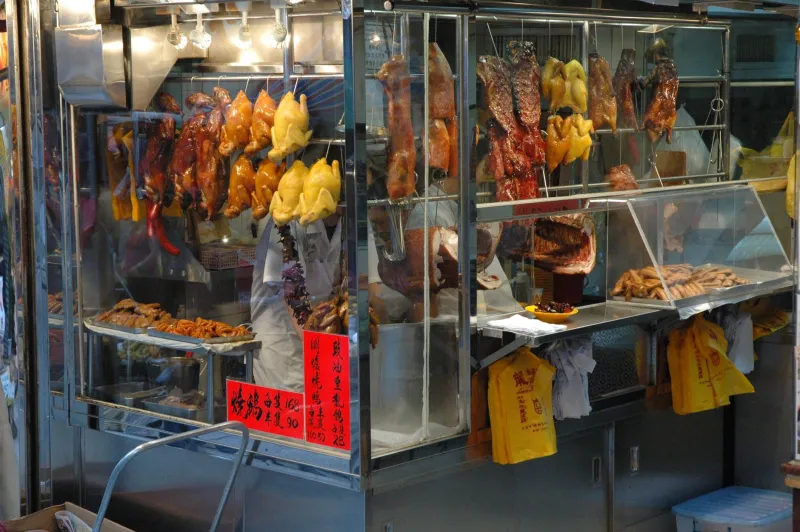
There is a chicken rotating in a glass case somewhere near you right now. At Costco, at your local grocery store, maybe at a Boston Market off the highway. It smells incredible. It costs less than it probably should. And almost nobody stops to wonder how it got there.
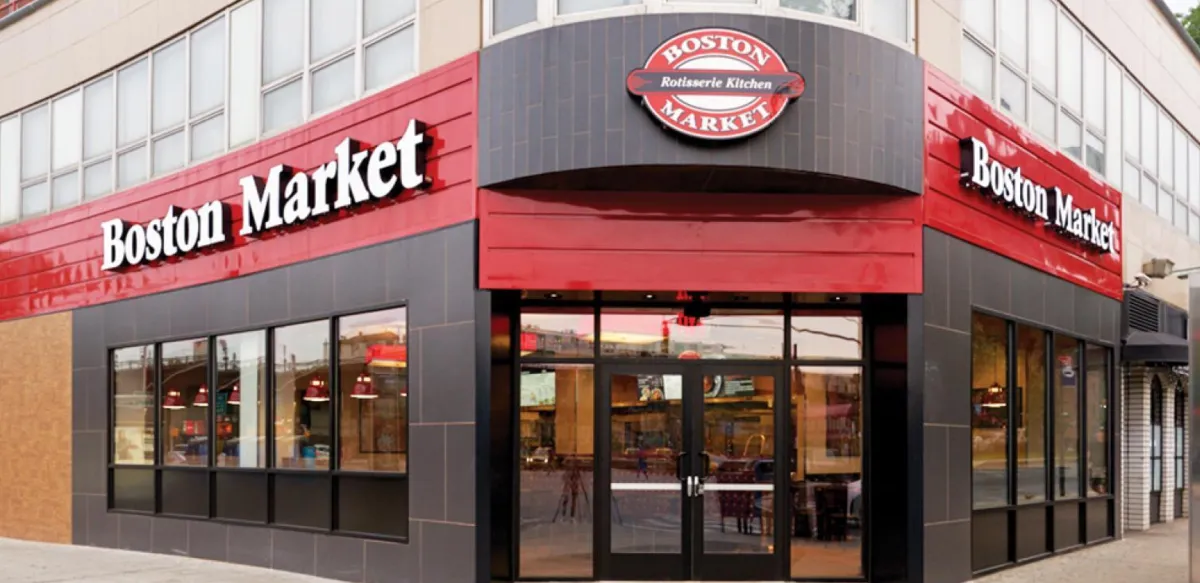 Photo: Boston Market, via www.bostonmarket.com
Rotisserie chicken is so familiar that it barely registers as a cultural artifact. But trace it back and you find a surprisingly long and strange trail — one that winds through medieval kitchens, postwar American optimism, a fast-casual restaurant boom, and a deliberate retail pricing decision that makes almost no financial sense on paper.
The Oldest Trick in the Kitchen
Spit-roasting meat over an open fire is about as ancient a cooking method as humans have managed to devise. Medieval European kitchens relied on a rotating spit positioned over a hearth, with the job of turning it often assigned to the lowest-ranking person in the household — sometimes a child, sometimes a dog on a treadmill. The French eventually refined the process into something closer to an art form, and by the 18th century, Parisian street vendors were selling whole birds roasted on communal spits as a fast, affordable meal for working people.
The word rotisserie itself is French, derived from rôtisserie, meaning a shop that sells roasted meats. For most of American history, that concept stayed largely European. Home cooks roasted chickens in ovens. Restaurants did the same. The idea of a slowly rotating bird as a commercial proposition didn't really take hold in the United States until the technology caught up with the appetite.
The Postwar Kitchen Experiment
After World War II, American appliance manufacturers were in an expansive mood. The war had accelerated industrial production, and now those same factories needed peacetime customers. Companies like Sunbeam and Hamilton Beach began producing countertop rotisserie attachments — electric spits designed to sit on your kitchen counter and slowly rotate a chicken while you went about your day.
They were marketed as modern marvels, proof that the future of cooking was effortless and scientific. Ads in women's magazines showed gleaming chrome contraptions producing perfect golden birds with almost no human intervention. The pitch was simple: this is what cooking looks like now.
The appliances sold reasonably well, but they never became essential. Most Americans went back to their ovens. The rotisserie attachment ended up in the same garage sale pile as the fondue pot and the electric carving knife. What the postwar experiment proved, though, was that Americans wanted roasted chicken. They just didn't want to do the work.
Boston Market Bets on Busy
Fast forward to 1985. A pair of entrepreneurs named Arthur Cores and Steven Kolow opened a restaurant in Newton, Massachusetts, called Boston Market — originally Boston Chicken — built around a single premise: that time-pressed American families would pay good money for food that tasted like someone's mother had made it. The menu was built around rotisserie chicken, served with sides like mashed potatoes and creamed spinach, designed to feel like a home-cooked meal that nobody at home had actually cooked.
 Photo: Newton, Massachusetts, via massbaymovers.com
The concept caught fire. By the early 1990s, Boston Market was one of the fastest-growing restaurant chains in the country. Investors poured in money. Locations multiplied across the suburbs. The chain was selling the emotional experience of a family dinner without the inconvenience of having to produce one, and Americans were enthusiastic customers.
The business eventually ran into financial turbulence — expansion outpaced profits, and the company filed for bankruptcy in 1998 before being acquired by McDonald's and later sold again. But the cultural work was already done. Boston Market had permanently installed rotisserie chicken in the American imagination as a specific category of comfort food. It wasn't just roasted chicken anymore. It was rotisserie chicken, which somehow sounded fancier and more deliberate.
The Costco Paradox
Here is where the story gets genuinely strange. Costco sells its rotisserie chickens for $4.99. That price has not changed since 2009. By most estimates, the company loses money on every single bird — somewhere between fifty cents and a dollar per chicken, depending on feed costs and supply chain variables in any given year.
Costco sells around 100 million rotisserie chickens annually. The math on that loss is significant. So why do they keep doing it?
The answer is that the chicken is what retail strategists call a loss leader — a product priced below cost specifically to draw customers into the store. Once you're inside Costco for the chicken, you leave with a flat-screen television and three years' worth of paper towels. The chicken pays for itself in foot traffic.
But the strategy only works because of the emotional weight the product carries. Costco's rotisserie chicken has become something close to a cultural institution. There are Reddit communities dedicated to it. Food writers describe it with genuine affection. People plan shopping trips around it. The company has reportedly considered raising the price multiple times and backed down each time, partly because the backlash from members has been fierce enough to make it not worth the trouble.
A $4.99 chicken has become a loyalty mechanism more powerful than most marketing campaigns.
What the Spinning Bird Actually Sold
The deeper story behind rotisserie chicken isn't really about cooking technique or retail economics. It's about what Americans were looking for at different moments in history.
In the postwar years, it was the promise of modern convenience — technology doing the work so you didn't have to. In the 1990s, it was the simulation of domesticity for a generation of two-income households that didn't have time to actually be domestic. Today, it's the comfort of something familiar and affordable in a grocery store where everything else seems to cost more every month.
The rotating spit has been doing essentially the same thing for centuries. What changes is the story Americans need it to tell.