The Salesmen of Sorrow: How Civil War Undertakers Convinced America That Death Required Professional Help
When Death Was a Family Affair
In 1850, when someone died in America, their family knew exactly what to do. The women would wash and dress the body, the men would build a wooden coffin, and neighbors would dig a grave in the family cemetery or churchyard. The wake happened in the family's front parlor, with the deceased surrounded by relatives, friends, and homemade food.
Death was handled the same way Americans handled birth, illness, and most other life events — as a community responsibility that required no special expertise or professional intervention. The idea of paying strangers to manage your family's grief would have seemed not just unnecessary, but almost insulting.
Then the Civil War changed everything.
The Business Opportunity in Battlefield Preservation
When the war began in 1861, both sides expected it to end quickly. Nobody planned for the logistical nightmare of transporting hundreds of thousands of dead soldiers back to their hometowns for burial. Families wanted their sons' bodies returned, but corpses couldn't survive the long train journeys from Southern battlefields to Northern parlors.
A handful of enterprising men saw an opportunity. Thomas Holmes, a former medical student, began offering embalming services to preserve soldiers' bodies for transport. Using techniques borrowed from medical schools and ancient Egyptian practices, Holmes could keep a corpse looking presentable for weeks — long enough to ship it home by rail.
 Photo: Thomas Holmes, via english-online.pl
Holmes charged $100 per body (about $3,000 today), a fortune that most families could barely afford. But grief-stricken parents and widows paid anyway, desperate to bring their loved ones home for proper burial. By the war's end, Holmes had embalmed over 4,000 soldiers and become wealthy in the process.
From Battlefield Service to Hometown Industry
After 1865, men like Holmes faced a problem: the war was over, but they had invested in expensive embalming equipment and learned specialized skills. They needed to find peacetime customers for wartime services.
The solution was brilliant and gradual. Instead of returning to their pre-war occupations, these "undertakers" (they chose the name to sound like other respectable trades) began setting up shop in American towns, positioning themselves as essential service providers for any family dealing with death.
They didn't start by telling families that home burial was wrong. Instead, they offered to help with the most difficult parts: preparing the body, building a better coffin, coordinating with the cemetery. They presented themselves as skilled craftsmen who could relieve families of death's most burdensome technical details.
The Gradual Redefinition of Proper Mourning
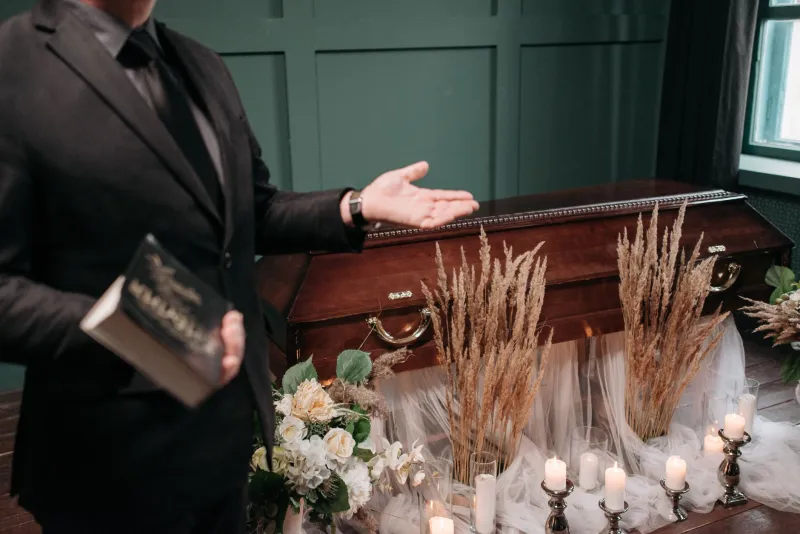
The undertakers' real genius was in slowly redefining what constituted appropriate respect for the dead. They introduced new standards that families couldn't meet at home: professionally embalmed bodies that looked "natural," elaborate metal caskets that promised eternal preservation, and formal funeral services conducted in dedicated parlors rather than family homes.
Each innovation created a new expectation. If your neighbor's funeral featured a satin-lined casket, your family's homemade wooden box seemed inadequate. If the family down the street held their service in the undertaker's elegant parlor, your front room felt shabby by comparison.
The undertakers reinforced these feelings by emphasizing the "dignity" and "respectability" of professional services. They suggested that families who handled their own funerals were being disrespectful to the deceased — or worse, revealing their lower social status.
The Science of Selling Grief
By the 1880s, undertakers had developed sophisticated sales techniques specifically designed for grieving customers. They understood that bereaved families were emotionally vulnerable and often willing to spend beyond their means to demonstrate their love for the deceased.
The industry created artificial urgency around funeral decisions, insisting that arrangements had to be made immediately while families were still in shock. They offered payment plans that made expensive services seem affordable, and they framed every upgrade as a way to honor the deceased's memory.
Most cleverly, they positioned themselves as grief experts who understood what families needed better than the families themselves. The undertaker became not just a service provider, but a counselor who could guide families through the "proper" way to mourn.
Making Home Burial Seem Strange
As the funeral industry grew more established, undertakers began actively discouraging home burial. They cited health concerns (largely exaggerated), legal requirements (often invented), and social expectations (which they had created) to convince families that professional services weren't just better, but necessary.
They lobbied for regulations that made home preparation of bodies more difficult, requiring permits, inspections, and certifications that only licensed undertakers possessed. They convinced local governments that public health required professional oversight of all death-related activities.
By 1900, what had been normal for centuries — families caring for their own dead — was becoming illegal in many American cities. The undertakers had successfully transformed a family responsibility into a professional service.
The Emotional Manipulation of Mourning
The industry's most effective strategy was emotional rather than practical. Undertakers convinced families that the amount of money spent on a funeral reflected the depth of their love for the deceased. A simple burial became evidence of insufficient affection, while an expensive funeral proved proper devotion.
This messaging was particularly effective with immigrant families trying to demonstrate their American respectability, and with working-class families who had few other opportunities to display their success. The funeral became a public statement about both the deceased's worth and the family's social standing.
Undertakers also created new traditions that required professional involvement: elaborate flower arrangements, printed programs, guest books, and coordinated services that were too complex for families to manage alone.
The Complete Transformation
By 1920, the undertakers' victory was complete. What Americans now called "funeral directors" (a more dignified title) had convinced the country that death required professional management. Home burial had become not just unusual, but unthinkable for most families.
The industry had created an entire infrastructure around death: funeral homes replaced family parlors, cemeteries replaced family plots, and professional mourning rituals replaced community-based traditions. Americans now spent more on funerals than most other countries spent on weddings.
The Legacy of Professional Grief
Today, the average American funeral costs over $7,000, and many families go into debt to pay for services that their great-grandparents would have provided themselves. The funeral industry generates over $20 billion annually by managing an experience that was once handled entirely within families and communities.
The transformation was so complete that most Americans can't imagine handling death any other way. The idea of washing a family member's body, building their coffin, or burying them on family land seems not just difficult, but inappropriate — exactly as the undertakers intended.
The Quiet Revolution
The funeral industry's success represents one of the most thorough cultural transformations in American history. In just two generations, entrepreneurs convinced an entire nation that one of humanity's most universal experiences — caring for the dead — required professional expertise that families couldn't provide.
They didn't achieve this through force or legal requirement, but through patient salesmanship and emotional manipulation. They identified a moment of maximum vulnerability — grief — and built an entire industry around convincing people that their natural instincts were inadequate.
The Civil War undertakers who started by preserving soldiers for transport home ended up preserving something much more valuable: a permanent market for professional services that families had always provided for themselves. They turned death into a business, and convinced America that it had always been that way.