When America's Mail System Nearly Broke From Too Much Fun: The Forgotten Postcard Frenzy That Predicted Social Media
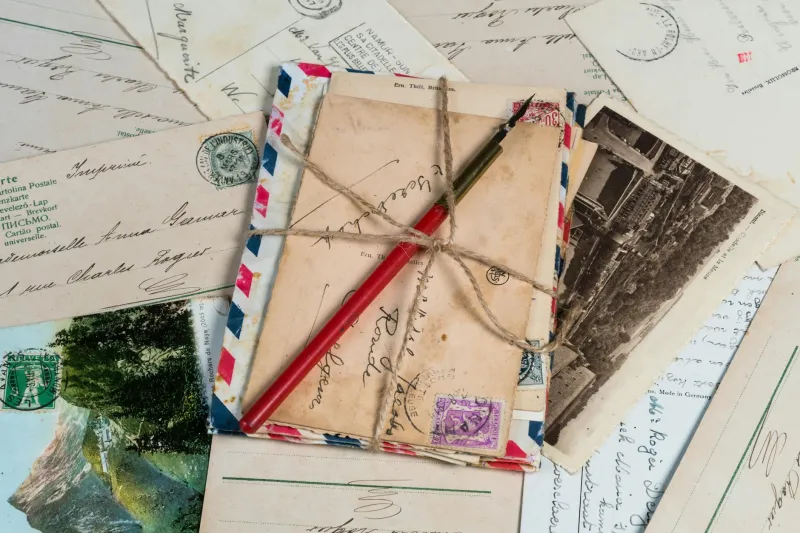
The Day the Post Office Broke
On a Tuesday morning in October 1907, the main post office in Chicago simply stopped functioning. Not because of a strike or a natural disaster, but because Americans had become completely obsessed with sending postcards to each other.
The building's sorting room was buried under mountains of small, colorful cards. Postal workers couldn't move between the sorting tables. Mail trucks couldn't unload because there was nowhere to put more cards. The system had hit a breaking point that nobody saw coming.
Across the country, similar scenes were playing out in New York, San Francisco, and dozens of smaller cities. America was in the grip of postcard mania, and the infrastructure couldn't handle it.
The Regulation That Started It All
The crisis began three years earlier with what seemed like a minor bureaucratic change. In 1898, Congress had passed the Private Mailing Card Act, allowing privately printed postcards to be sent through the mail for just one cent—half the price of a regular letter.
But there was a catch: these cards could only have the address on one side. Any message had to be crammed around the edges of the picture side, leaving barely any room for writing.
Then, on March 1, 1907, the Post Office Department made a seemingly small adjustment. They allowed the back of postcards to be divided—half for the address, half for a message.
That tiny change unleashed something nobody anticipated.
America Discovers Visual Communication
Sudenly, Americans could send a picture AND a message for just a penny. The response was immediate and overwhelming.
People began sending postcards for everything. Not just "Wish you were here" vacation notes, but daily communication. "Running late for dinner." "Beautiful sunset tonight." "Thinking of you."
Families started sending postcards to relatives in the same city. Friends mailed them across town. Some people sent postcards to their neighbors just because they could.
The visual element was revolutionary. For the first time, ordinary Americans could easily share what they were seeing with people far away. A street scene from downtown Detroit could be in someone's hands in rural Michigan within a day or two.
The Industry That Exploded Overnight
Postcard publishers scrambled to meet demand. Every city, every tourist attraction, every notable building suddenly needed its own postcard. Local photographers became entrepreneurs, capturing images of main streets, hotels, churches, and scenic views.
By 1908, over 30,000 different postcard designs were being published annually in the United States. Small-town druggists and hotel lobbies became postcard retailers. Department stores dedicated entire sections to postcard displays.
The variety was staggering: comic postcards with jokes, holiday greetings, political messages, advertisements, and even postcards featuring nothing but text in decorative fonts.
The Collecting Craze
What started as communication became obsession. Americans began collecting postcards with the same fervor they'd later bring to baseball cards or Pokemon.
Postcard clubs formed in every major city. Members would meet to trade cards, discuss rare finds, and organize group purchases. Some collectors specialized in specific themes—flowers, buildings, famous people, or cards from particular states.
Families kept postcard albums in their parlors, displaying their collections to visitors. Children traded postcards at school. The hobby crossed all social and economic boundaries.
When Fun Broke the System
The numbers were staggering. In 1906, Americans sent 770 million postcards. In 1907, that number jumped to over a billion. By 1908, it was approaching 1.5 billion cards annually.
To put that in perspective: the entire population of the United States was only about 90 million people. Americans were sending more than 15 postcards per person per year, including children and babies.
Post offices weren't designed for this volume of small, lightweight mail. Sorting equipment couldn't handle the flood. Mail carriers' bags became too heavy. Delivery schedules fell behind.
In some cities, the Post Office Department had to hire temporary workers just to handle postcards. Special sorting facilities were set up. Some post offices stayed open late to process the daily avalanche of cards.
The Social Media Blueprint
Looking back, the postcard craze predicted almost everything we now do online. Americans were:
- Sharing visual snapshots of their daily lives
- Sending quick, casual messages to large networks of friends and family
- Collecting and curating content from others
- Using images to communicate emotions and experiences
- Creating communities around shared interests
- Treating communication as entertainment, not just necessity
The language of postcards even resembled modern social media. Messages were short, often just a few words. People developed shorthand and abbreviations. The focus was on immediate, visual communication rather than lengthy correspondence.
The Crash and the Legacy
The postcard boom couldn't last forever. By 1913, the craze was fading. The novelty wore off. Telephone service was expanding, offering more immediate communication. World War I shifted national attention to more serious matters.
But the cultural impact was permanent. Americans had learned to think visually about communication. They'd experienced the pleasure of sharing experiences instantly with distant friends and family. They'd discovered that casual, frequent contact could maintain relationships in new ways.
When radio, television, and eventually the internet arrived, Americans were already culturally prepared for these technologies. They'd already learned, through postcards, that communication could be visual, immediate, and social.
The Pattern Repeats
The postcard mania of 1907 followed the same pattern we'd see repeated throughout the 20th century: a new communication technology emerges, people adopt it faster than infrastructure can handle, the system temporarily breaks down, then adapts and evolves.
We saw it with telephone party lines in the 1920s, television broadcasting in the 1950s, and internet servers crashing under early web traffic in the 1990s. Each time, Americans' enthusiasm for new ways to communicate outpaced the systems designed to support them.
The next time your social media app crashes because too many people are trying to share photos of the same event, remember the Chicago post office in 1907. We've been breaking communication systems with our enthusiasm for sharing experiences for more than a century.
Sometimes the most important innovations happen not when technology changes, but when people discover new ways to use existing tools. The divided postcard back wasn't a revolutionary invention—it was a tiny regulatory adjustment that unleashed a fundamental human desire to share our world with others.
And that desire, it turns out, was strong enough to temporarily break the United States Postal Service.