Twelve Numbers, Zero Logic: How America Got Stuck Reading Time the Hard Way
Photo: EgorovaSvetlana, CC BY-SA 4.0, via Wikimedia Commons
If you were designing a device to help people read time at a glance, you probably wouldn't start with a circle divided into twelve units when the day has twenty-four hours. You wouldn't ask people to distinguish between two hands of different lengths moving at different speeds. And you almost certainly wouldn't build a system where the same display means two completely different things depending on whether it's morning or afternoon.
And yet here we are. The twelve-hour analog clock face is so deeply embedded in American life that most people never stop to notice how genuinely strange it is. The story of how it got that way is less about superior design and more about the particular accidents of history that determine which ideas become permanent.
The Competition Nobody Remembers
Before the circular numbered clock face became standard in America, the field was considerably more chaotic. Early American clockmakers — particularly in the eighteenth and early nineteenth centuries — experimented with a range of display approaches, some practical and some deeply eccentric.
Certain clockmakers used Roman numerals exclusively, which created a different reading experience than Arabic numerals and appealed to customers who associated Roman lettering with quality and tradition. Others produced clocks with no numerals at all, relying on evenly spaced tick marks that assumed the reader already had a strong mental model of where each hour fell. Some European designs that circulated in American markets used letters or symbols at key positions, essentially arguing that you only needed to mark twelve, three, six, and nine to orient the eye.
There were also serious proposals, particularly in the late 1800s, for twenty-four-hour clock faces that would eliminate the AM/PM ambiguity entirely. Railroad companies, which were dealing with the very real operational problem of trains arriving and departing at the wrong times because workers confused morning and afternoon hours, had strong institutional reasons to prefer a system where noon and midnight were clearly distinguishable. Some railroad clocks did adopt twenty-four-hour displays, but they never migrated into domestic life.
The Railroad Problem That Almost Changed Everything
American railroads deserve a starring role in almost any story about standardization, and the history of timekeeping is no exception. Before 1883, American time was genuinely anarchic — cities and towns set their clocks based on local solar noon, which meant that traveling by rail through several states could require passengers to adjust their watches multiple times.
On November 18, 1883, the major American railroad companies imposed a system of standardized time zones — four of them, covering the continental United States — without any act of Congress. They simply announced it, the newspapers called it "The Day of Two Noons" because clocks in many cities had to be set back, and the country largely went along with it.
 Photo: United States, via img1.etsystatic.com
This moment of forced standardization is important because it established a precedent: the people who controlled infrastructure could determine how Americans understood and used time. But the railroads standardized when time was measured, not how it was displayed. The clock face question remained unsettled, and it was resolved through a different mechanism entirely — the marketplace.
The Manufacturers Who Picked a Winner
By the second half of the nineteenth century, American clock manufacturing had become a genuine industrial enterprise. Companies like Seth Thomas, Ansonia, and the New Haven Clock Company were producing clocks by the hundreds of thousands, using interchangeable parts and assembly-line methods that dramatically reduced prices. A clock that would have been a significant household purchase in 1820 was an affordable commodity by 1880.
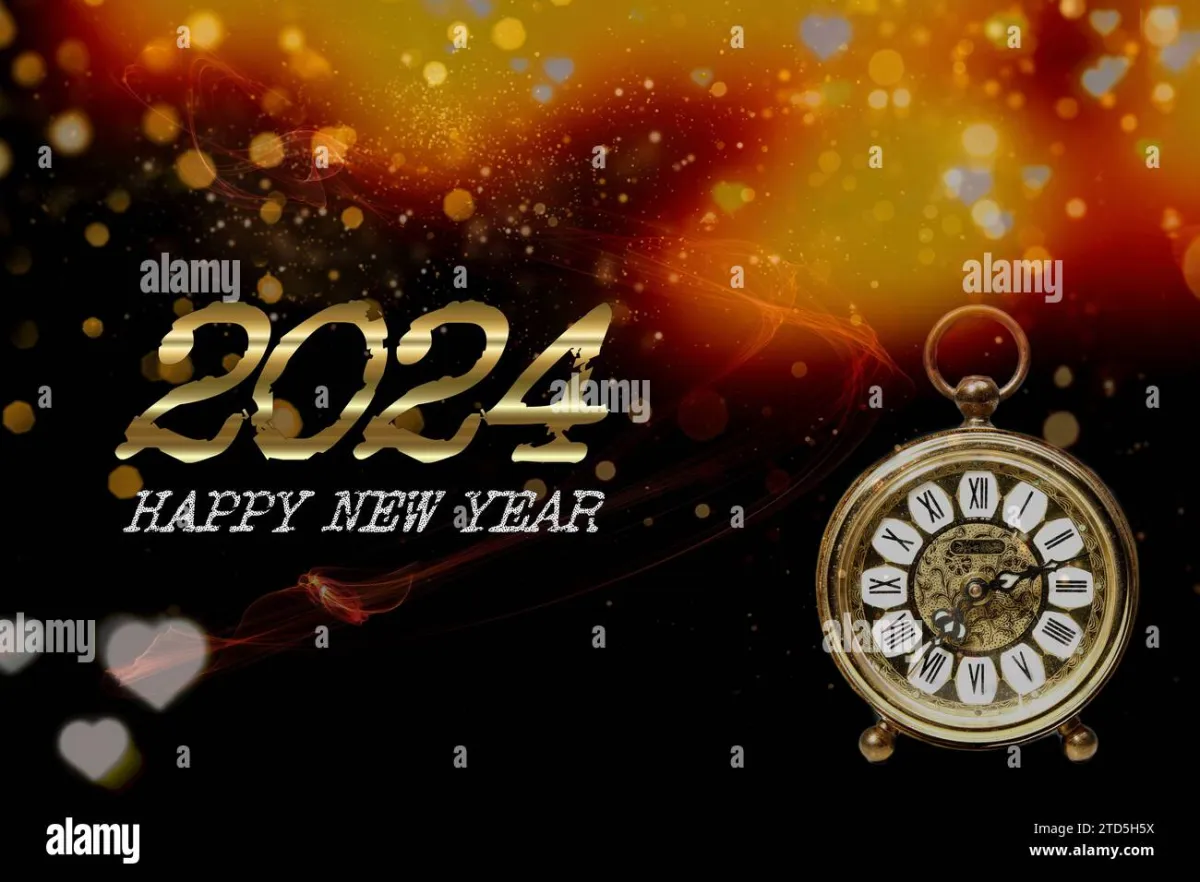 Photo: New Haven Clock Company, via c8.alamy.com
 Photo: Seth Thomas, via i.pinimg.com
This industrialization had a standardizing effect on design. When you're producing clocks at scale, you want to minimize variation. A single mold, a single printed dial design, a single set of hands — these efficiencies pushed manufacturers toward a common format. The twelve-hour Arabic numeral face won not because anyone declared it the official standard, but because enough large manufacturers adopted it that it became the default option in stores across the country.
Schools reinforced this. Teaching children to read a clock became a standard part of American elementary education in the late nineteenth century, and teachers needed a single design to work with. Whatever clock happened to be on the classroom wall became the template. By the early twentieth century, an entire generation had learned to read time on the same basic format, and that shared literacy made alternatives increasingly impractical.
The Design That Shaped Everything Around It
Once the twelve-hour analog face became universal, it started shaping things well beyond timekeeping. The clock face became a spatial metaphor that Americans applied to navigation — "at your twelve o'clock" entered military and aviation language as a way to describe direction. Meeting rooms and offices arranged themselves around the assumption that everyone could glance at the same wall clock and instantly agree on what time it was. The visual vocabulary of the clock face — the positions of hands, the rhythm of the sweep second hand — became embedded in film and television as shorthand for urgency or calm.
Even digital clocks, when they arrived in consumer electronics in the 1970s, didn't displace the analog face so much as coexist with it. Smartwatches today default to displaying analog clock faces as an option, despite having no mechanical reason to do so. The design has become its own justification — we read it instantly because we've always read it, and we've always read it because it was the version that got industrialized first.
The Clockmakers Nobody Celebrates
The inventors and designers who pushed competing formats — the twenty-four-hour advocates, the symbol-based display experimenters, the minimalist tick-mark schools — left almost no cultural trace. Their ideas were reasonable. Some were arguably more logical than what survived. But logic has a limited role in determining which designs become permanent.
What determines permanence, more often than not, is timing. The twelve-hour numbered face arrived at the moment when American manufacturing was ready to produce it at scale, when American schools were ready to teach it systematically, and when American consumers were ready to buy it cheaply. That convergence locked in a design that might otherwise have been one option among many.
Every time you glance at a clock and instantly know whether you're late, you're benefiting from a standardization battle that was fought and won before anyone alive today was born — by manufacturers and schoolteachers and railroad executives who probably never thought of themselves as deciding anything more significant than what to put on a dial.