Before the Smiley Face: How Humans Have Always Needed a Way to Show They Were Joking
Somewhere in your messages right now, there's probably an emoji doing work that words couldn't. A raised eyebrow. A chef's kiss. A little yellow face that communicates, with zero ambiguity, that you are not actually angry—you're just messing around. It feels like a modern invention, born from smartphones and texting culture. But the problem it solves is ancient. And the solutions humans kept inventing, across wildly different eras, are more similar than you'd expect.
The Problem With Writing Things Down
Spoken language carries a lot of invisible information. Tone, pause, facial expression, volume—these all shape meaning in ways that words on a page simply can't replicate. Medieval scribes knew this. When copying manuscripts, they sometimes inserted small marks—a curved line, a dot pattern—to signal that a passage was meant humorously or ironically. These weren't standardized symbols, and they didn't survive long enough to become universal, but the impulse behind them is recognizable: the reader needs to know I don't mean this literally.
The same frustration showed up in early printed books. In 1580, a French poet named Henry Estienne proposed a dedicated punctuation mark for irony—a reversed question mark that would signal sarcasm to the reader. It never caught on. Over the following centuries, other writers and typographers proposed similar marks. None of them stuck either. The written word, it seemed, was just going to stay emotionally flat.
Telegraph Operators Had Their Own Shorthand
Fast forward to the 1800s, and suddenly written communication got faster than it had ever been—and even more stripped down. Telegraph operators were paid by the character. Efficiency was everything. Out of that pressure came a surprisingly rich culture of abbreviations. Operators developed shorthand codes not just for common phrases but for emotional states. "GM" for good morning. "GA" for go ahead. And reportedly, "73" for love and kisses—a warm sign-off between operators who spent hours communicating through taps and clicks.
These weren't emojis. But they were filling the same gap. When you're working in a medium that strips out everything except the literal content of your words, you find ways to smuggle tone back in.
The Night a Computer Scientist Typed a Colon and a Parenthesis
For most of the twentieth century, the emotional flatness of written communication was just a limitation people lived with. Letters were formal enough that it usually didn't matter. But in the early 1980s, something changed. Computer scientists and researchers at Carnegie Mellon University were communicating through early online message boards—and they were running into a very old problem. Jokes weren't landing. Sarcasm was being read as sincerity. Without tone of voice, the whole thing kept going sideways.
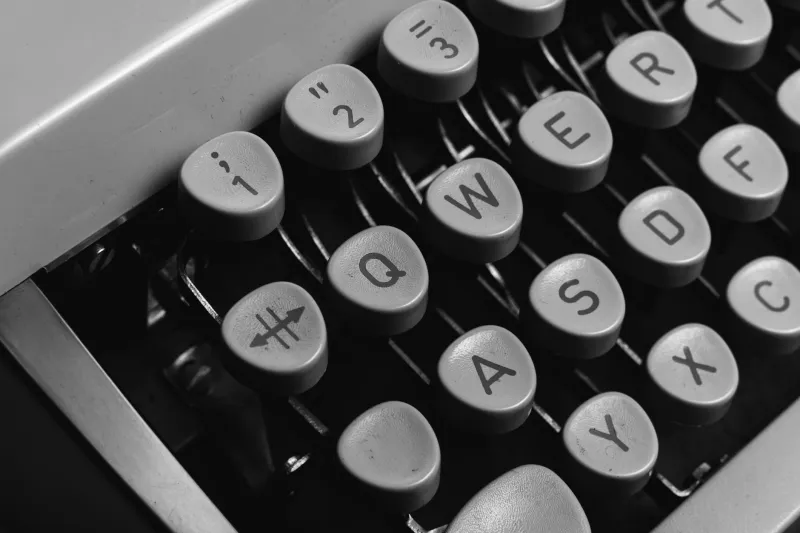
On September 19, 1982, a professor named Scott Fahlman posted a message suggesting that people use :-) to mark jokes and :-( to mark serious posts. It was a throwaway suggestion, buried in a thread about a fake warning sign in a building. But it spread. Within months, other online communities had picked it up. The emoticon—emotion plus icon—had arrived.
What's remarkable is how little Fahlman was trying to invent something. He was solving an immediate, practical problem: how do you tell people you're being funny when all you have is a keyboard? The answer he reached for—a face, tilted sideways, made from punctuation—tapped into something deeply human. We communicate emotion with our faces. Of course that's where we'd go.
From ASCII Art to a Billion Dollar Market
The emoticon spread through the 1980s and 1990s as internet culture expanded. Early chat rooms and email threads were full of them. Users got creative—elaborate ASCII constructions that depicted everything from a rose to a shrug. The sideways constraint of the original :-) eventually gave way to Eastern-style emoticons that read upright: ^_^ and (^.^) became common in Japanese online communities, where a different visual grammar had developed independently.
In 1999, a Japanese designer named Shigetaka Kurita created the first formal emoji set for a mobile internet platform. He drew 176 images—12 by 12 pixels each—designed to make messages feel warmer and more expressive on a tiny screen. His inspiration included manga facial expressions, international road signs, and Chinese characters. The set was practical, not artistic. But it planted the seed.
When Apple added emoji support to the iPhone in 2008—initially only for Japanese users, then globally in 2011—the floodgates opened. Today, the Unicode Consortium officially approves new emoji every year. There are more than 3,600 of them. They've been studied by linguists, debated by courts trying to interpret threatening messages, and used by brands as a marketing language. A single eggplant emoji carries cultural meaning that would take three paragraphs to explain in plain English.
The Thread That Runs Through All of It
Here's what's interesting when you trace the whole line: medieval scribes marking irony, telegraph operators signing off with "73," Scott Fahlman typing a sideways face on a university message board, Shigetaka Kurita drawing a tiny sun and a tiny heart. None of them thought they were contributing to the same project. But they were all solving the same problem.
Written language is efficient. It travels across distances, survives time, scales to billions of people. But it loses something in translation—the warmth, the humor, the eye-roll that tells you everything is fine. Every generation that's pushed communication into faster, leaner, more stripped-down formats has had to reinvent a way to carry tone along with content.
The emoji didn't come from nowhere. It came from a very old human frustration with the limits of putting words on a page—and a very consistent instinct to draw a face instead.