Dress Down, Move Up: The Silicon Valley Wardrobe Experiment That Swallowed Corporate America
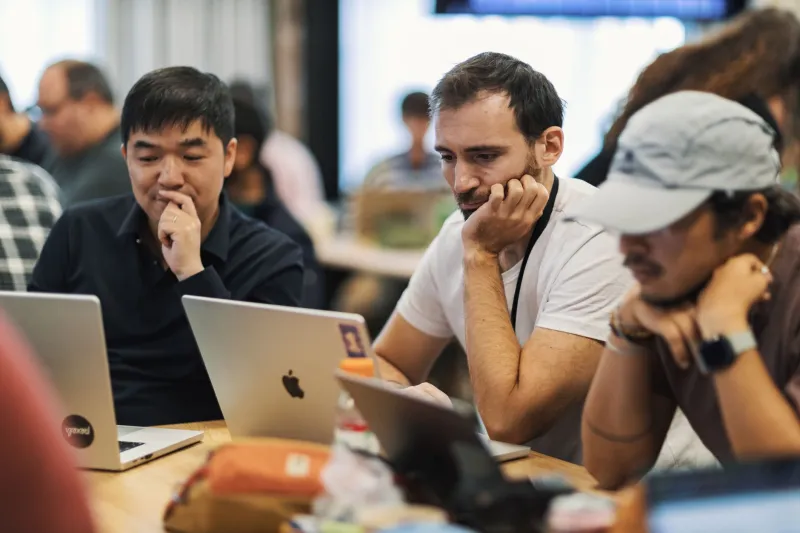
Somewhere in a mid-sized American office right now, someone is wearing jeans to a meeting. Maybe they're presenting to a client. Maybe they're interviewing for a promotion. Maybe they're the CEO. Nobody is commenting on this, because at some point in the last thirty years, it stopped being remarkable. The suit — that great symbol of American professional seriousness — didn't die in a dramatic cultural confrontation. It got quietly outflanked by a Friday afternoon experiment in a California office park.
The Suit as Uniform
For most of the twentieth century, the American office had a dress code whether it was written down or not. Men wore suits, or at minimum a blazer and tie. Women navigated a more complicated set of expectations that varied by industry and era but consistently signaled formality. The underlying logic was simple and rarely questioned: professional clothing communicated professional intent. You dressed for the job as a way of demonstrating that you took the job seriously.
This wasn't just American. The formal workplace wardrobe was a transatlantic inheritance, rooted in nineteenth-century British notions of the respectable clerk and the gentleman businessman. But America had absorbed and intensified it — by the mid-twentieth century, the gray flannel suit had become almost a national archetype, a symbol of the organized, ambitious, corporate-minded American male.
The rules were enforced not by any single authority but by collective expectation. You wore what your colleagues wore. You wore what your boss wore. Deviation was noticed, and not favorably.
California Starts Asking Questions
By the late 1980s, the tech industry was growing fast enough to set its own terms. Companies in the San Francisco Bay Area were hiring young engineers and programmers who had never worked in traditional corporate environments and had no particular attachment to their conventions. The idea that a software developer needed to wear a tie to write better code struck many of them as transparently absurd.
The casual dress experiment didn't begin with a manifesto. It began with attrition — employers who needed talent badly enough to stop enforcing dress codes, offices where the culture was moving too fast to police what people wore. By the early 1990s, several tech companies had formalized what was already happening informally: employees could wear casual clothes on Fridays.
This was marketed, where it was marketed at all, as a small gift. A morale booster. A way of signaling that the company valued its people enough to let them be slightly more comfortable one day a week. The expectation, to the extent anyone had one, was that Monday through Thursday would remain professional and Friday would be the harmless exception.
Levi Strauss Saw an Opening
Here is where the story gets interesting in a specifically American way: a denim company noticed what was happening and decided to accelerate it.
In 1992, Levi Strauss & Co. — the San Francisco-based jeans manufacturer — distributed a guide called "A Guide to Casual Businesswear" to human resources departments across the country. The guide explained the concept of Casual Friday, provided guidelines for implementing it, and suggested, not entirely subtly, that jeans were appropriate casual business attire. It was one of the most effective pieces of corporate lobbying in American fashion history, dressed up as helpful HR guidance.
Levi's had a direct financial interest in normalizing denim in the workplace. Jeans were their core product, and if jeans became acceptable on Fridays, sales would follow. The guide worked. Companies that hadn't considered a casual dress policy suddenly had a framework for one, pre-packaged and ready to implement. The Friday exception spread from tech companies into finance, law, advertising, and eventually almost everywhere.
The Exception That Ate the Rule
Casual Friday was supposed to be contained. One day, defined boundaries, back to normal on Monday. What nobody fully anticipated was the psychological effect of the exception on the rule.
Once workers experienced a day without formal dress requirements, the formality of the other four days started to feel arbitrary in a new way. If a software engineer could write perfectly good code in jeans on Friday, why did the same code written in khakis on Wednesday represent a more professional contribution? The question, once asked, didn't have a satisfying answer.
Through the 1990s, the boundaries eroded gradually. Casual Friday expanded into casual Thursday, then into a general loosening of expectations throughout the week. Business casual — a category that barely existed as a named concept before 1990 — became the dominant mode in most American offices by the early 2000s. The suit retreated to client meetings, job interviews, and industries like law and finance that clung to formality as part of their brand identity.
Then the 2008 financial crisis hit, and something shifted further. In an economy where job security felt precarious and institutional trust was low, the suit — long associated with Wall Street and corporate authority — acquired a faintly toxic association for many younger workers. Silicon Valley's hoodie-and-jeans aesthetic, already established as the visual language of innovation and disruption, started to look less like a regional quirk and more like a statement of values.
The Pandemic Finished the Job
If Casual Friday cracked the foundation, the COVID-19 pandemic poured the demolition crew. Eighteen months of working from home in sweatpants recalibrated American workers' baseline expectations of comfort so dramatically that the return to office — where it happened at all — looked nothing like the departure. Dress codes that had already been loosening simply stopped being enforced. Athleisure, which had been creeping into casual professional settings for years, completed its migration into the workplace.
Today, the American professional wardrobe exists on a spectrum that would have been unrecognizable to a mid-century office worker. Jeans are standard in most industries. Sneakers appear in boardrooms. The suit persists in certain contexts but has lost its status as the default signal of professional seriousness.
All of it traces back to a Friday afternoon experiment in California that was never supposed to change anything permanently — and a jeans company that made sure it did.