How French Kings Taught Americans to Mow Their Way to Respectability
The Lawn That Conquered a Continent
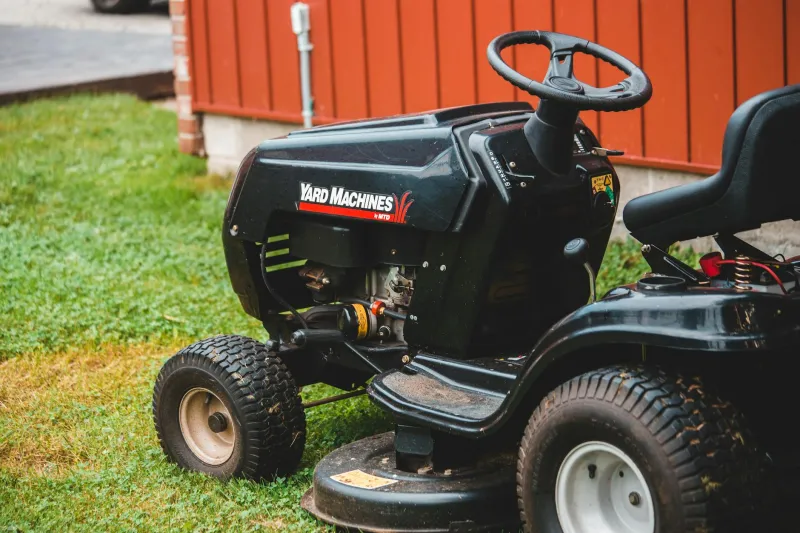
Every weekend, millions of Americans fire up lawnmowers to maintain something that makes no practical sense: a monoculture of grass that requires constant watering, fertilizing, and cutting to prevent it from doing what grass naturally wants to do—grow tall and diverse. This ritual consumes more water than corn production and more weekend hours than any other household maintenance task. Yet most Americans have never questioned why we decided that short, uniform grass represents the pinnacle of homeownership success.
The answer lies not in American soil, but in the palace gardens of 17th-century France, where aristocrats invented the lawn as the ultimate display of wealth and power.
When Grass Meant Royalty
In 1661, King Louis XIV commissioned landscape architect André Le Nôtre to design the gardens at Versailles. Le Nôtre's revolutionary idea was radical for its time: instead of filling every available space with productive crops or useful plants, he would create vast expanses of perfectly maintained grass that served no purpose except to look impressive.
 Photo: Louis XIV, via www.wildbike.it
These early lawns were called "tapis vert" (green carpets), and they were the most expensive landscaping feature imaginable. Maintaining short, uniform grass required armies of workers with scythes, constant watering during dry periods, and the luxury of dedicating prime agricultural land to pure aesthetics. Only the wealthiest aristocrats could afford such conspicuous waste.
The message was unmistakable: "I am so wealthy that I can afford to keep this land beautiful and useless." European nobility quickly copied the concept, turning manicured grass into the international symbol of aristocratic power.
The Colonial Transplant
When wealthy American colonists traveled to Europe in the 18th century, they brought back detailed descriptions of aristocratic gardens. George Washington installed a bowling green at Mount Vernon. Thomas Jefferson experimented with ornamental lawns at Monticello. But these early American lawns remained curiosities for the extremely wealthy—most colonists were too busy growing food to waste land on grass.
 Photo: Mount Vernon, via i.ytimg.com
The lawn might have remained a rich man's folly, but the Industrial Revolution changed everything. In the 1850s, English inventor Edwin Budding created the first mechanical lawn mower, making grass maintenance possible without hiring teams of workers with scythes. Suddenly, middle-class families could theoretically maintain the same landscaping feature that had once been reserved for kings.
The Suburban Conspiracy
The real lawn explosion began after World War II, when suburban developers discovered that grass solved multiple problems simultaneously. Lawns were cheaper than elaborate landscaping, created visual uniformity across developments, and gave new homeowners a clear maintenance task that kept them busy and invested in their property.
Developers like William Levitt, who built Levittown and other massive suburban communities, made lawns mandatory. Every house came with a small front lawn and larger backyard, along with deed restrictions requiring homeowners to maintain the grass. For the first time in American history, lawn care became a legal obligation rather than a personal choice.
The Marketing of Middle-Class Respectability
The lawn and garden industry recognized a massive opportunity. Companies like Scotts Miracle-Gro launched campaigns positioning lawn care as essential to good citizenship and family values. Their advertisements featured happy families playing on perfect grass, suggesting that proper lawn maintenance was crucial for children's development and neighborhood stability.
Local governments reinforced this message by passing ordinances requiring property owners to maintain their grass below certain heights. By the 1960s, most American suburbs had laws making it illegal to let your lawn grow naturally. What had begun as an aristocratic luxury became a middle-class obligation enforced by municipal code.
The Ecological Absurdity
Modern American lawns represent one of the largest ecological interventions in human history. The Environmental Protection Agency estimates that lawn irrigation consumes nearly 9 billion gallons of water daily—more than the entire American corn crop. Homeowners apply roughly 10 times more chemical pesticides and fertilizers per acre to their lawns than commercial farmers use on food crops.
Most American grass varieties aren't even native to North America. Kentucky bluegrass, the gold standard of suburban lawns, originally came from Europe and requires constant intervention to survive in most American climates. We're essentially forcing foreign plants to grow in inappropriate environments, then spending enormous resources to keep them alive.
The Weekend Ritual Nobody Questions
Despite the ecological and economic costs, lawn mowing has become one of America's most sacred weekend rituals. The sound of lawnmowers on Saturday morning is as much a part of suburban life as barbecues and block parties. Homeowners who neglect their lawns face social ostracism and legal penalties, while those with perfect grass earn neighborhood respect.
The lawn care industry now generates over $35 billion annually, employing hundreds of thousands of Americans in jobs that exist solely to maintain an aesthetic ideal imported from French palaces. We've created an entire economy around keeping grass short.
The Status Symbol That Became Law
What makes the American lawn phenomenon so remarkable is how completely we've forgotten its origins. Most homeowners genuinely believe that maintaining short grass is natural, practical, or somehow essential to property ownership. Few realize they're participating in a centuries-old status display that originated in the courts of French kings.
The next time you mow your lawn, remember that you're not maintaining your property—you're performing a ritual of middle-class respectability that traces back to Versailles. Every weekend, millions of Americans recreate the palace gardens of Louis XIV, using water and chemicals to maintain an imported symbol of aristocratic power that somehow became the defining feature of democratic homeownership.
It's perhaps the most successful cultural transplant in American history: a royal luxury that became a suburban necessity, enforced by law and maintained by choice, consuming vast resources to achieve an aesthetic that most people never think to question.