Why Every Swimming Pool in America Looks Like a Cartoon Lagoon
The Color That Doesn't Exist in Nature
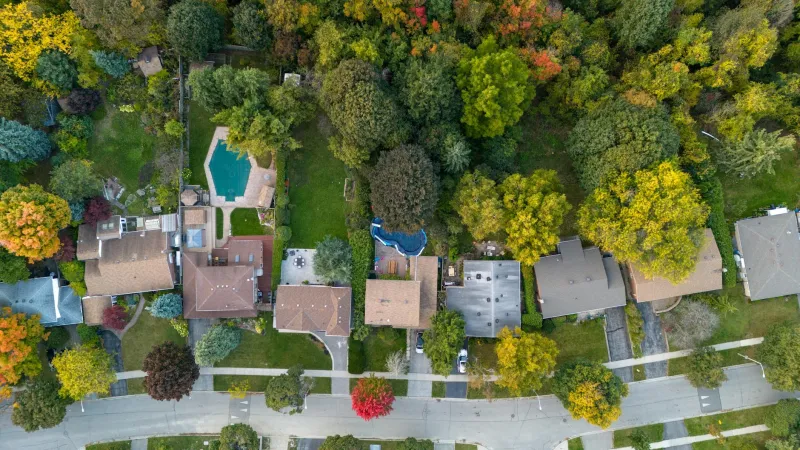
Walk through any American suburb and you'll see it: that unmistakable electric blue glowing from backyard swimming pools. It's become so synonymous with leisure that we barely question it. But here's the thing—that particular shade of turquoise doesn't really exist anywhere in nature. Not in tropical lagoons, not in pristine mountain lakes, and definitely not in the muddy swimming holes where Americans first learned to swim.
So how did an entire nation agree that this one artificial color meant "vacation"?
The answer involves a chemical accident, some cost-cutting tile manufacturers, and a postwar marketing campaign that accidentally created one of America's most enduring visual symbols.
When Pool Water Was Actually Clear
Before the 1950s, most American pools were painted white or lined with white tiles. The water itself was crystal clear—you could see straight to the bottom with no color distortion. Pool builders focused on cleanliness and functionality, not aesthetics.
But maintaining that pristine clarity required constant work. Pool owners had to manually test and adjust chemical levels daily. The slightest imbalance would turn the water cloudy or, worse, green with algae.
Then came copper sulfate.
The Chemical That Changed Everything
Pool maintenance companies in the 1940s started adding copper sulfate as an algaecide. It was incredibly effective at preventing algae growth, but it had an unexpected side effect: it turned the water a faint blue-green color.
Initially, pool owners complained. They wanted their water clear, not tinted. But pool service companies noticed something interesting—customers stopped calling to report "dirty" water. Even when chemical levels were slightly off, the blue tint masked minor cloudiness that would have been obvious in clear water.
What started as an unwanted side effect became a feature.
The Tile Industry's Happy Accident
Around the same time, ceramic tile manufacturers were facing their own problem. White pool tiles showed every flaw, every slight variation in glazing. Quality control was expensive, and customer complaints were constant.
Someone at a tile company—history doesn't record who—suggested trying blue tiles instead. Light blue glazes were more forgiving. Small imperfections disappeared against the colored background. Manufacturing costs dropped.
When blue tiles met copper-tinted water, something magical happened. The combination created that distinctive turquoise glow that seemed to emanate from within the pool itself.
Hollywood Sells a Dream
By the early 1950s, pool builders in Los Angeles were installing blue-tiled pools for movie stars and studio executives. Hollywood photographers loved them. The blue water photographed beautifully in color magazines, creating an otherworldly backdrop for glamour shots.
 Photo: Los Angeles, via images-wixmp-ed30a86b8c4ca887773594c2.wixmp.com
Suddenly, magazines like Life and Look were full of images showing starlets lounging beside impossibly blue pools. The color became associated with wealth, leisure, and the California dream.
Pool builders across the country started getting requests: "We want it to look like the ones in the magazines."
The Suburban Explosion
When the suburban boom hit in the 1960s, pool companies needed to build faster and cheaper. Blue became the obvious choice. Blue tiles were less expensive to manufacture consistently. Blue-tinted water required less precise chemical balancing. And customers specifically asked for "that Hollywood blue."
The pool industry had stumbled into the perfect storm: a color that was cheaper to produce, easier to maintain, and actively desired by customers.
Marketing a Mistake
By the 1970s, pool companies weren't just accepting the blue color—they were marketing it. Advertisements promised "crystal blue lagoons" and "tropical paradise in your backyard." The artificial turquoise became a selling point, not a side effect.
Pool chemical companies reformulated their products to enhance the blue tint rather than minimize it. What had once been an unwanted consequence of algae prevention became the primary visual goal.
The Psychology of Pool Blue
Color psychologists later discovered why Americans embraced this particular shade so enthusiastically. The turquoise blue triggered associations with tropical destinations and clean, safe water. It suggested both escape and hygiene—perfect for a culture increasingly focused on leisure and cleanliness.
Interestingly, pools in other countries don't share America's obsession with this color. European pools often maintain clear water. Australian pools favor deeper blues. But in America, that specific turquoise became the only "correct" color for pool water.
The Legacy of an Accident
Today, American pool owners spend millions of dollars annually on chemicals and treatments specifically designed to achieve and maintain that artificial blue color. Pool stores sell "Blue Sparkle" and "Tropical Lagoon" additives. The accident of the 1940s has become a deliberate aesthetic choice.
The irony is that most Americans now find clear pool water unsettling. We've become so accustomed to the blue that transparent water looks "wrong" or "unhealthy," even when it's perfectly clean.
What started as an unwanted side effect of algae treatment became the defining visual characteristic of American summer. Every time you see that electric blue glowing from a backyard pool, you're looking at the result of a chemical accident that an entire culture decided to embrace.
Sometimes the most iconic parts of our landscape aren't designed at all—they're just happy mistakes we collectively agreed to keep.